£40.00
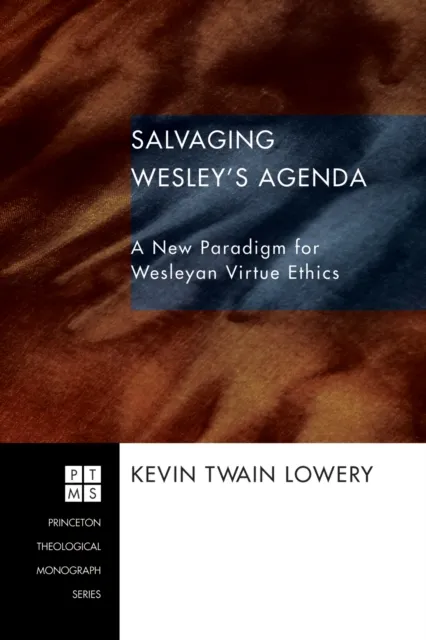
Salvaging Wesley's Agenda
A New Paradigm for Wesleyan Virtue Ethics

Kevin Twain Lowery's Perspective
Kevin Twain Lowery believes that two of John Wesley's most distinctive doctrines—his doctrines of assurance and Christian perfection—have not been sufficiently developed. Rather, these doctrines have either been distorted or neglected. Lowery suggests that since Wesleyan ethics is centered on these two doctrines, they need to be recast in a schema that emphasizes the cognitive aspects of religious knowledge and moral development.
Salvaging Wesley's Agenda
Salvaging Wesley's Agenda constructs such a new framework in three stages. First, Lowery explores Wesley's reliance upon Lockean empiricism. He contends that Wesleyan epistemology should remain more closely tied to empirical knowledge and should distance itself from mystical and intuitionist models like Wesley's own spiritual sense analogy.
Second, examining the way that Wesley appropriates Jonathan Edwards's view of the religious affections, Lowery shows that Wesleyan ethics should not regard emotions as something to be passively experienced. Rather, emotions have cognitive content that allows them to be shaped.
Third, Lowery completes the new framework by suggesting ways to revise and expand Wesley's own conceptual scheme. These suggestions allow more of Wesley's concerns to be incorporated into the new schema without sacrificing his core commitments.
The Final Chapter
The final chapter sketches the doctrines of assurance and perfection in the new framework. Assurance is based on religious faith and on self-knowledge (both empirical and psychological), and perfection is understood in a more teleological context. The result is a version of Wesleyan ethics more faithful to Wesley's own thought and able to withstand the scrutiny of higher intellectual standards.