£45.99
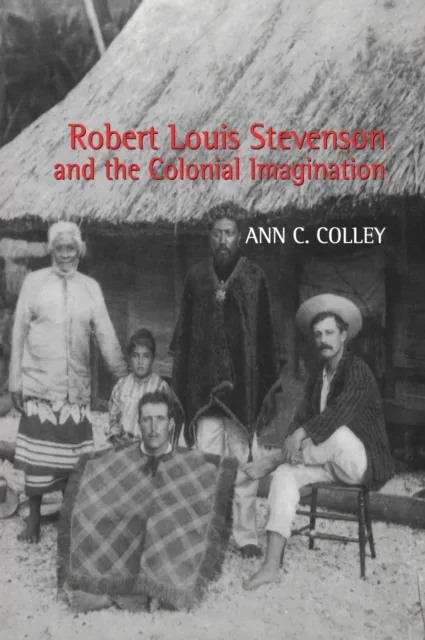
Robert Louis Stevenson and the Colonial Imagination

In her distinguished and hauntingly rendered book
Ann C. Colley provides a fresh insight into Stevenson’s multi-voiced South Seas fiction, as well as into the particulars and complications of living within a newly established site of Empire. Bringing to light information from the archives of the London Missionary Society and from other sources, such as the Royal Geographical Society (London), the Writers' Museum (Edinburgh), the Beinecke Library (Yale University), and the Huntington Library (San Marino, California), Colley examines the intricate nature of Robert Louis Stevenson’s relation to imperialism.
Stevenson’s complex relationship to missionary culture
In particular, she investigates Stevenson’s complex relationship to the missionary culture that surrounded him during the last six years of his life (1888-1894), revealing hitherto unscouted routes by which to understand Stevenson’s experiences while he was cruising among the South Sea islands, and later while he was a resident colonial in Samoa.
Beginning with a history of the missionaries in the Pacific that reveals Stevenson’s criticism of, yet ultimate support for, their work, and demonstrates how these attitudes helped shape his South Sea fiction, Robert Louis Stevenson and the Colonial Imagination constitutes a major work of reconstruction from archival sources.
Subsequent chapters focus on Stevenson’s struggles with personal and cultural identity in the South Seas, and his interest in photography, panoramas, and magic lantern shows, revealing Stevenson’s sensitivity to the ways light plays upon darkness to create meaning.
In addition, Stevenson’s serious commitment to political issues and his thoughts about power and nationhood are explored.
Finally, Stevenson’s recollections of his childhood are engaged not only to suggest an unacknowledged source (the juvenile missionary magazines) for A Child’s Garden of Verses, but also to illuminate the generous reach of his imagination that exceeds the formulae of the missionary culture and the boundaries of the colonial construct.