£179.50
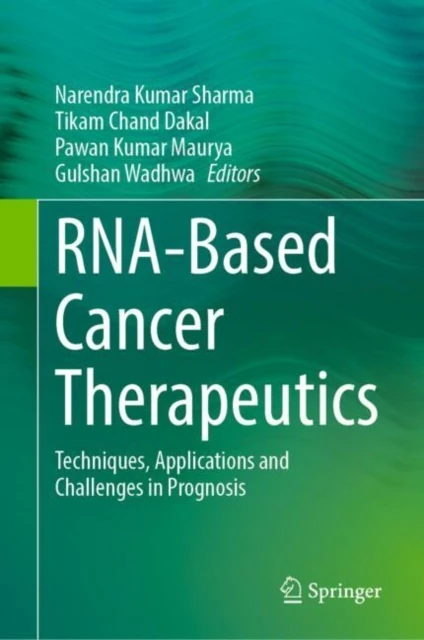
RNA-Based Cancer Therapeutics
Techniques, Applications and Challenges in Prognosis

Introduction
By consistently dedicating efforts to multi-omic and other high-throughput technologies, it is expected that RNA therapies will have a vital role in future personalized medicine approaches for cancer therapy. Within this framework, analyzing the genetic sequence of a patient's tumor would allow for the detection of crucial driver mutations or changes that cause resistance to drugs. These mutations may then be targeted with RNA therapies that are particularly designed to treat those particular variations.
Recent Advances and Challenges
Recent clinical trials have shown that RNA-based therapies hold great potential for treating several illnesses. However, further investigations are required to improve the delivery materials and understand the RNA alterations linked to these groundbreaking drugs, in order to facilitate their integration into clinical practice. Ideally, these therapeutic substances would be specifically administered to the tumor cells of interest using a targeted delivery agent.
Future Perspectives
In this hypothetical situation, the choice of medications for cancer patients would differ depending on the precise abnormalities detected in each person, potentially including inhibitors that target circuits known to cause resistance to treatments. However, doing a more thorough assessment of the challenges and potential benefits discussed in each chapter would enhance the capacity to critically analyze this rapidly evolving field of therapies.
Conclusion
This book largely examines the latest developments and clinical studies related to RNA-based medications, while also examining the challenges and future possibilities linked with them. This method shows potential for greatly improving the prognosis of cancer patients.