£40.59
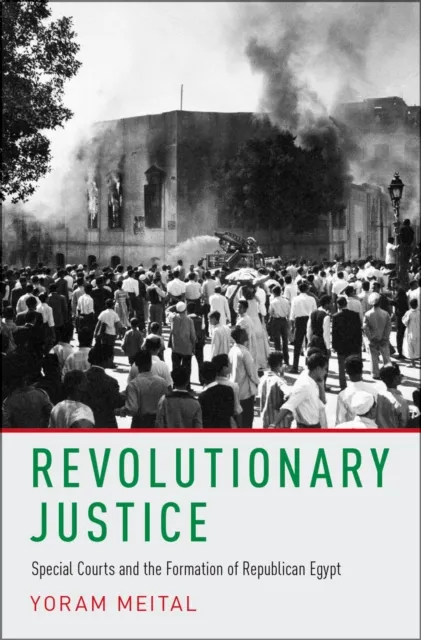
Revolutionary Justice
Special Courts and the Formation of Republican Egypt

Revolutionary Justice narrates the power struggle between the Free Officers and their adversaries in the aftermath of Egypt's July Revolution of 1952 by studying trials held at the Revolution's Court and the People's Court. The establishment of these tribunals coincided with the most serious political crisis between the new regime and the opposition—primarily the Muslim Brothers and the Wafd party, but also senior officials in the previous government. By this point, the initial euphoria and the unbridled adoration for the Free Officers had worn off, and the focus of the public debate shifted to the legitimacy of the army's continued rule.
Yoram Meital charts the crucial events of the Egyptian Revolution both within and outside the courtroom. The tribunals' transcripts, which constitute the prime source of his study, offer a rare glimpse of the dialogue between parties that held conflicting views. While "show trials" against political dissidents are generally considered of little historical value, Revolutionary Justice lucidly shows that the rhetoric generated by Egypt's special courts played a crucial role in the denouement of political struggles, the creation of new historical trends, and the shaping of both the regime and the opposition's public image. The deliberations at the courtroom reinforced the prevailing emergency atmosphere, helping the junta advance its plans for a new dispensation.
On the other hand, the responses of defendants and witnesses during the trial exposed weaknesses in the official hegemonic narrative. Paradoxically, oppositional views that the regime tirelessly endeavored to silence were tolerated and recorded in the courtroom.