£45.49
£64.99
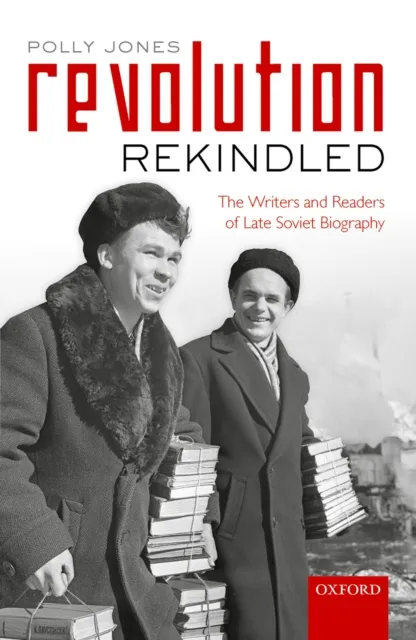
Revolution Rekindled
The Writers and Readers of Late Soviet Biography

Revolution Rekindled
Towards the end of the Khrushchev era, a major Soviet initiative was launched to rekindle popular enthusiasm for the revolution, which eventually gave rise to over 150 biographies and historical novels (The Fiery Revolutionaries/Plamennye revoliutsionery series), authored by many key post-Stalinist writers and published throughout late socialism until the Soviet collapse.
What new meanings did revolution take on as it was reimagined by writers, including dissidents, leading historians, and popular historical novelists? How did their millions of readers engage with these highly varied texts? To what extent does this Brezhnev-era publishing phenomenon challenge the notion of late socialism as a time of stagnation, and how does it confirm it?
By exploring the complex processes of writing, editing, censorship, and reading of late Soviet literature, Revolution Rekindled highlights the dynamic negotiations that continued within Soviet culture well past the apparent turning point of 1968, through to the late Gorbachev era. It also complicates the opposition between official and underground post-Stalinist culture by showing how Soviet writers and readers engaged with both, as they sought answers to key questions of revolutionary history, ethics, and ideology.
Polly Jones reveals the enormous breadth and vitality of the historical turn amongst the late Soviet population. Revolution Rekindled is the first archival, oral history, and literary study of this unique late socialist publishing experiment, from its beginnings in the early 1960s to its collapse in the early 1990s. It draws on a wide range of previously untapped archives, including those of the publisher Politizdat, of Soviet institutions in charge of propaganda, publishing, and literature, and of many individual writers. It also uses in-depth interviews with Brezhnev-era writers, editors, and publishers, and assesses the generic and stylistic innovations within the series' biographies and novels.