£119.50
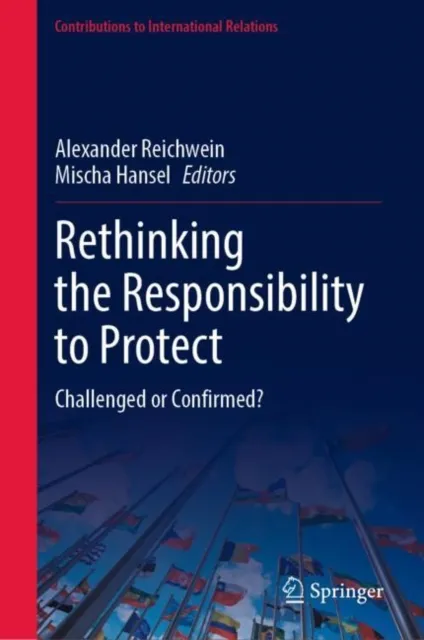
Rethinking the Responsibility to Protect
Challenged or Confirmed?

Introduction
This edited volume critically examines the Responsibility to Protect (R2P) as a guiding norm in international politics. After NATO’s intervention in Libya, against the backdrop of civil wars in Syria and Yemen, and because of the cynical support for R2P by states such as Saudi Arabia, this norm is the subject of heavy criticism. It seems that the R2P is just political rhetoric, an instrument exploited by the powerful states. Hence, the R2P is being challenged. At the same time, however, institutional settings, normative discourses and contestation practices are making it more robust. New understandings of responsibility and the politics of protection are creating new normative spaces, patterns of legitimacy, and norm entrepreneurs, thereby reinforcing the R2P.
Goals and Focus
This book’s goals are to discuss the R2P’s roots, institutional framework, and evolution; to reveal its shortcomings and pitfalls; and to explore how it is exploited by certain states. Further, it elaborates on the R2P’s strength as a norm. Accordingly, the contributions presented here discuss various ways in which the R2P is being challenged or confirmed, or both at once. As the authors demonstrate, these developments concern not only diplomatic communication and political practices within international institutions, but also to normative discourses.
Reevaluating R2P
Furthermore, the book includes chapters that reevaluate the R2P from a normative standpoint, e.g. by proposing cosmopolitan standards as a guide for states’ external behavior. Other contributors reassess the historical evidence from U.N. negotiations on the R2P principle, and the productive or restrictive role of institutions. Discussing new issues relating to the R2P such as global and regional power shifts or foreign policy, as well as the phenomenon of authoritarian interventionism under the R2P umbrella, this book will appeal to all IR scholars and students interested in humanitarianism, norms, and power. By analyzing the status quo of the R2P, it enriches and broadens the debate on what the R2P currently is, and what it ought to be.