£109.50
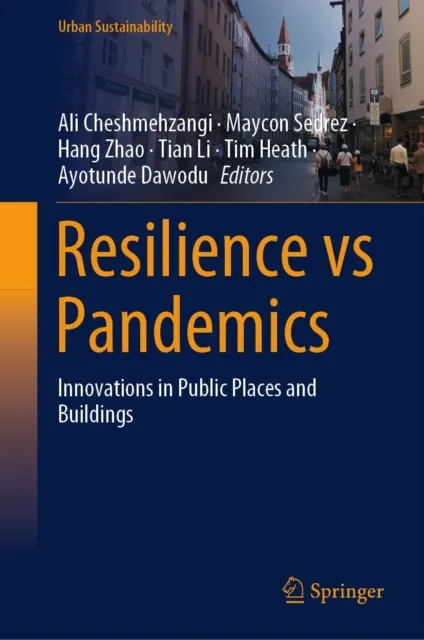
Resilience vs Pandemics
Innovations in Cities and Neighbourhoods

Introduction
The COVID-19 pandemic and other highly transmissible diseases outbreaks have given a new significance to the concept of “resilience”, placing it in the spotlight of built environment-related studies. New directions have emerged from expanding on adaptive planning, urban layouts, urban morphologies, spatial planning, healthy cities, etc. To enhance resilience in the post-pandemic era, various theories, practices, and hypotheses are being formulated by scholars around the world.
Call for Chapter Proposals
For this book project, we invite chapter proposals that provide forefront discoveries about the built environment resilience during and after the ongoing pandemic. Historical perspectives of resilience and other highly transmissible diseases are also relevant to understanding the COVID-19 issues. The authors are encouraged to elaborate on critical exploratory, innovative, and cutting-edge research approaches, highlighting the effects of COVID-19 and other highly transmissible diseases in the design, planning, and perception of the built environment. We aim to gather scientific experiences, reviews, analyses, discussions, recommendations, and solutions in the fields of urban planning, urban design, urban management, environmental science, architecture, etc.
Objectives of the Book
The book aims to document resilience-related innovations and new perspectives for the built environment, how people’s interactions adapt to new realities, and which mechanisms, tools, and strategies are required for such transformations in the following two scales of the built environments:
(1) City/district; research on planning, commuting and mobility, politics, urban configurations, regulations, transmission and prevention, models, top-down processes, innovation processes, etc.
(2) Community/neighborhood; research on collaboration, transmission and prevention, isolation and quarantine, social aspects, accessibility to services, technologies, education, policies, and innovative solutions.
Scope of Studies
The book covers a wide range of studies, including physical and non-physical studies, which may refer to the city infrastructure, green/blue spaces, housing, policy-making, health services, social and economic issues, etc. The findings and results contribute to the decision-making of governments, organizations, and institutions, as well as inspire scholars and future research for developing resilience in the post-pandemic era.