£40.99
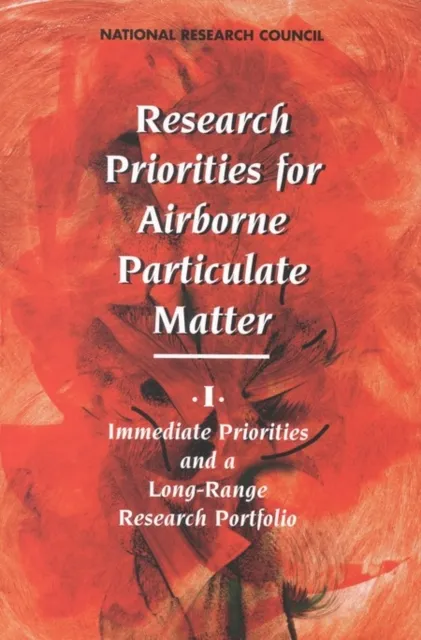
Research Priorities for Airborne Particulate Matter
I. Immediate Priorities and a Long-Range Research Portfolio

New National Ambient Air Quality Standards for airborne particles smaller than 2.5 micrometers, called PM2.5, were issued by the U.S. Environmental Protection Agency (EPA) amidst scientific uncertainty and controversy.
In response to a request from Congress, Research Priorities for Airborne Particulate Matter, the first of four books in a series, offers a conceptual framework for an integrated national program of particulate-matter research, identifies the 10 most critical research needs linked to key policy-related scientific uncertainties, and describes the recommended timing and estimated costs of such research.
The committee concludes that EPA should devote more resources to investigating the relationships between fixed-site outdoor monitoring data and actual human breathing-zone exposures to ambient particulate matter and to identifying the most biologically important constituents and characteristics of particulate matter through toxicological studies. The recommended research activities are critical to determining actual exposures of human subpopulations most susceptible to harm from the most hazardous constituents of particulate matter. Future research will be an investment in public health and a means to ensure that resources spent on control technology and regulatory compliance will have a reasonable probability of success.