£83.00
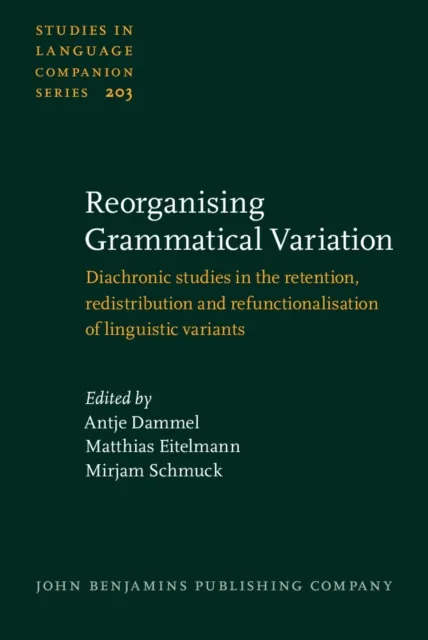
Reorganising Grammatical Variation
Diachronic studies in the retention, redistribution and refunctionalisation of linguistic variants

Introduction
With most studies on grammatical variation concentrating on the synchronic level, a systematic investigation of long-term grammatical variation within the context of language change, i.e. from a predominantly diachronic perspective, has largely remained a desideratum.
Scope of the Volume
The present volume fills this research gap by bringing together nine empirically rich bottom-up case studies on morphological and morphosyntactic variation phenomena in standard and dialect varieties of Indo-European languages (Germanic, Romance, Greek).
Key Findings
While variation has often been regarded as merely a transitory epiphenomenal symptom of change, the findings of this volume show that variation is a resilient feature of human language and answer the question what makes variation time-stable.
Relevance
Bridging the gap between corpus-based research on language variation and more theory-driven typological and functional approaches, the volume is of special interest for all researchers concerned with interface phenomena seeking to gain a broader understanding of the mechanisms of linguistic variation and change.