£50.99
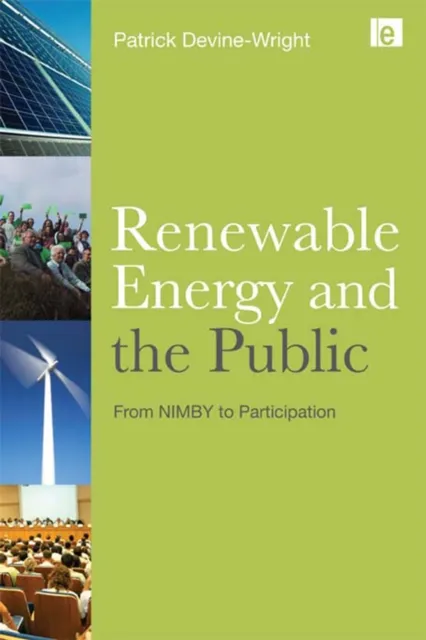
Renewable Energy and the Public
From NIMBY to Participation

Introduction
Throughout the world, the threat of climate change is pressing governments to accelerate the deployment of technologies to generate low carbon electricity or heat. But this is frequently leading to controversy, as energy and planning policies are revised to support new energy sources or technologies (e.g. offshore wind, tidal, bioenergy or hydrogen energy) and communities face the prospect of unfamiliar, often large-scale energy technologies being sited near to their homes. Policy makers in many countries face tensions between “streamlining” planning procedures, engaging with diverse publics to address what is commonly conceived as “NIMBY” (not in my back yard) opposition, and the need to maintain democratic, participatory values in planning systems.
Scope of the Book
This volume provides a timely, international review of research on public engagement, in contexts of diverse, innovative energy technologies. Public engagement is conceived broadly - as the interaction between how developers and other key actors engage with publics about energy technologies (including assumptions held about the methods used, such as the provision of financial benefits or the holding of deliberative events), and how individuals and groups engage with energy policies and projects (including indirectly through the media and directly through emotional and behavioural responses).
Contributors and Significance
The book's contributors are leading experts in the UK, Europe, North and South America and Australia drawn from a variety of relevant social science disciplinary perspectives. The book makes a significant contribution to our existing knowledge, as well as providing interested professionals, policymakers and members of the public with a timely overview of the critical issues involved in public engagement with low carbon energy technologies.