£35.99
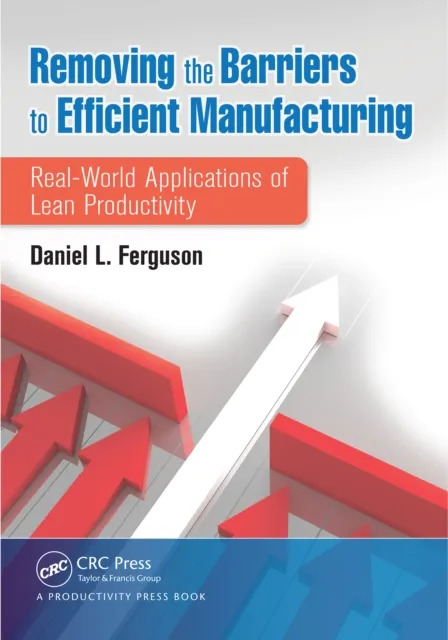
Removing the Barriers to Efficient Manufacturing
Real-World Applications of Lean Productivity

W. Edwards Deming’s Central Premise
W. Edwards Deming‘s central premise was that improvements in product quality would increase productivity, improve competitive position, and help ensure long-term survival. Point 12 of his landmark 14 Points for Management says that management‘s job is to remove the barriers that keep people from taking pride in their work. That‘s exactly what this book is about.
Removing the Barriers to Efficient Manufacturing
Removing the Barriers to Efficient Manufacturing: Real-World Applications of Lean Productivity outlines time-tested organizational structures and methods to help you reduce variability and deliver high-quality products consistently. It describes the financial losses that can occur as a result of variability and details the specific activities management must engage in to avoid these losses and ensure long-term success.
How the Book Guides You
Instead of taking you on a random walk, the book supplies each manufacturing group in your organization with straightforward directions for creating a smooth-running facility with reduced variability. It includes work assignments in each chapter that, if completed in the order presented, will guide you through the creation of the Model Vision for your manufacturing facility. It also:
- Covers key topics on working with people, including training and retraining
- Supplies pointers for working with unions
- Considers Single Minute Exchange of Die (SMED)
- Describes how to put it all together with action plans
Additional Content
The book includes a write-up on Deming‘s famous Red Bead Experiment as well as an introduction to statistical process control techniques in the appendices.