£94.95
Religious Freedom and Mass Conversion in India

Hinduism and Religious Demographics in India
Hinduism is the largest religion in India, encompassing roughly 80 percent of the population, while 14 percent of the population practices Islam and the remaining 6 percent adheres to other religions. The right to "freely profess, practice, and propagate religion" in India''s constitution is one of the most comprehensive articulations of the right to religious freedom. Yet from the late colonial era to the present, mass conversions to minority religions have inflamed majority-minority relations in India and complicated the exercise of this right.
Overview of the Book
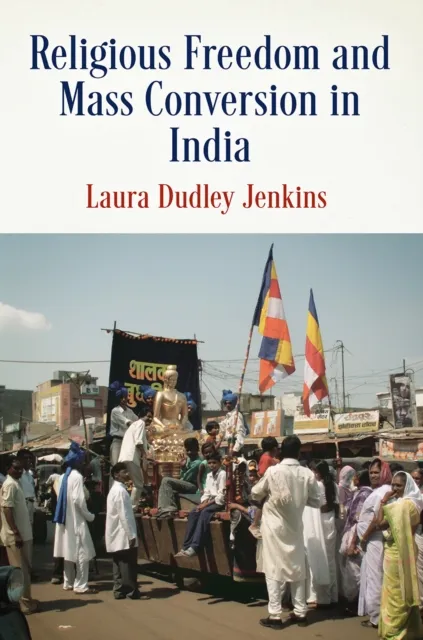
In Religious Freedom and Mass Conversion in India, Laura Dudley Jenkins examines three mass conversion movements in India: among Christians in the 1930s, Dalit Buddhists in the 1950s, and Mizo Jews in the 2000s. Critics of these movements claimed mass converts were victims of overzealous proselytizers promising material benefits, but defenders insisted the converts were individuals choosing to convert for spiritual reasons. Jenkins traces the origins of these opposing arguments to the 1930s and 1940s, when emerging human rights frameworks and early social scientific studies of religion posited an ideal convert: an individual making a purely spiritual choice. However, she observes that India''s mass conversions did not adhere to this model and therefore sparked scrutiny of mass converts'' individual agency and spiritual sincerity.
Challenges to Religious Freedom
Jenkins demonstrates that the preoccupation with converts'' agency and sincerity has resulted in significant challenges to religious freedom. One is the proliferation of legislation limiting induced conversions. Another is the restriction of affirmative action rights of low caste people who choose to practice Islam or Christianity. Last, incendiary rumors are intentionally spread of women being converted to Islam via seduction. Religious Freedom and Mass Conversion in India illuminates the ways in which these tactics immobilize potential converts, reinforce damaging assumptions about women, lower castes, and religious minorities, and continue to restrict religious freedom in India today.