£45.99
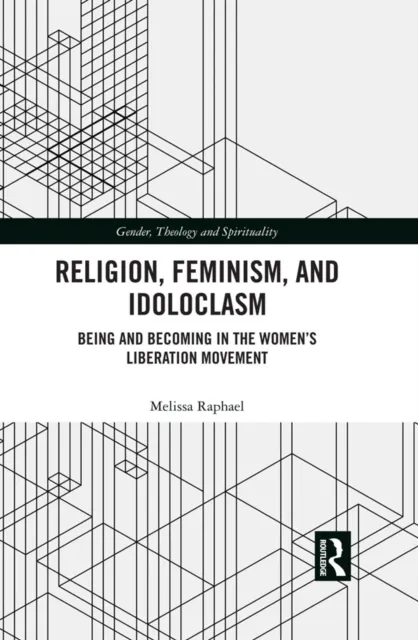
Religion, Feminism, and Idoloclasm
Being and Becoming in the Women's Liberation Movement

Religion, Feminism, and Idoloclasm
Religion, Feminism, and Idoloclasm identifies religious and secular feminism’s common critical moment as that of idol-breaking. It reads the women’s liberation movement as founded upon a philosophically and emotionally risky attempt to liberate women’s consciousness from a three-fold cognitive captivity to the self-idolizing god called ‘Man’; the ‘God’ who is a projection of his power, and the idol of the feminine called ‘Woman’ that the god-called-God created for ‘Man’.
Historical and Theoretical Context
Examining a period of feminist theory, theology, and culture from about 1965 to 2010, this book shows that secular, as well as Christian, Jewish, and post-Christian feminists drew on ancient and modern tropes of redemption from slavery to idols or false ideas as a means of overcoming the alienation of women’s being from their own becoming. With an understanding of feminist theology as a pivotal contribution to the feminist criticism of culture, this original book also examines idoloclasm in feminist visual art, literature, direct action, and theory, not least that of the sexual politics of romantic love, the diet and beauty industry, sex robots, and other phenomena whose idolization of women reduces them to figures of the feminine same, experienced as a de-realization or death of the self.
Implications and Significance
This book demonstrates that secular and religious feminist critical engagements with the modern trauma of dehumanization were far more closely related than is often supposed. As such, it will be vital reading for scholars in theology, religious studies, gender studies, visual studies, and philosophy.