£34.95
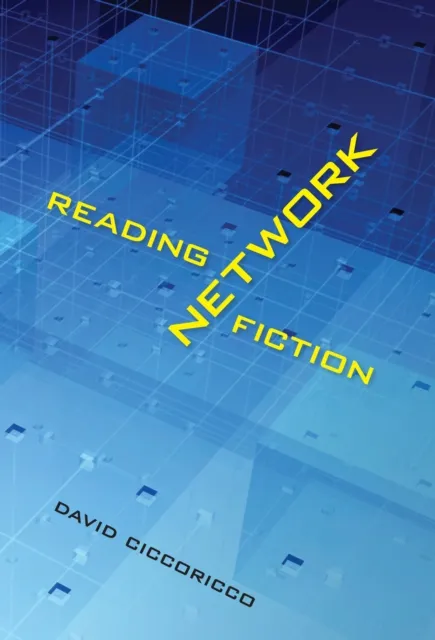
Reading Network Fiction

Introduction to Hypertext and Network Fiction
The marriage of narrative and the computer dates back to the 1980s, with the hypertext experiments of luminaries such as Judy Malloy and Michael Joyce. What has been variously called "hypertext fiction," "literary hypertext," and "hyperfiction" has surely surrendered any claim to newness in the 21st century.
Defining Network Fiction
David Ciccoricco establishes the category of "network fiction" as distinguishable from other forms of hypertext and cybertext: network fictions are narrative texts in digitally networked environments that make use of hypertext technology in order to create emergent and recombinant narratives. Though they both pre-date and post-date the World Wide Web, they share with it an aesthetic drive that exploits the networking potential of digital composition and foregrounds notions of narrative recurrence and return.
Development and Analysis of Network Fiction
Ciccoricco analyzes innovative developments in network fiction from first-generation writers Michael Joyce (Twilight, a symphony, 1997) and Stuart Moulthrop (Victory Garden, 1991) through Judd Morrissey’s The Jew's Daughter (2000), an acclaimed example of digital literature in its latter instantiations on the Web. Each investigation demonstrates not only what the digital environment might mean for narrative theory but also the ability of network fictions to sustain a mode of reading that might, arguably, be called "literary."
Changing Arts and Literary Challenges
The movement in the arts away from representation and toward simulation, away from the dynamics of reading and interpretation and toward the dynamics of interaction and play, has indeed led to exaggerated or alarmist claims of the endangerment of the literary arts. At the same time, some have simply doubted that the conceptual and discursive intricacy of print fiction can migrate to new media. Against these claims, Reading Network Fiction attests to the verbal complexity and conceptual depth of a body of writing created for the surface of the screen.