£35.99
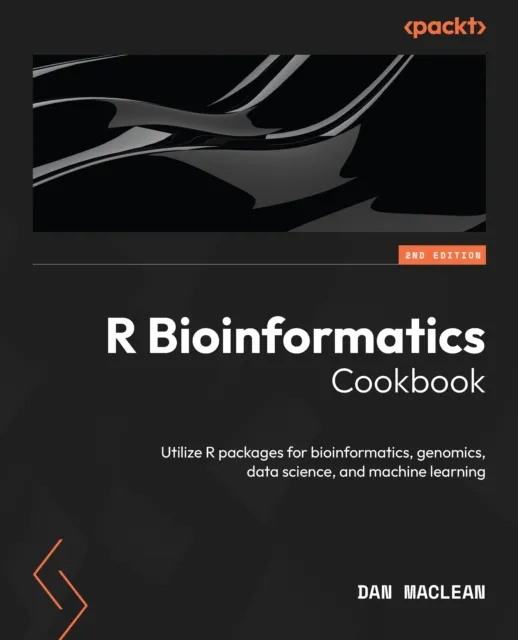
R Bioinformatics Cookbook
Use R and Bioconductor to perform RNAseq, genomics, data visualization, and bioinformatic analysis

Over 60 recipes to model and handle real-life biological data using modern libraries from the R ecosystem
Key Features
Apply modern R packages to handle biological data using real-world examples
Represent biological data with advanced visualizations suitable for research and publications
Handle real-world problems in bioinformatics such as next-generation sequencing, metagenomics, and automating analyses
Book Description
Handling biological data effectively requires an in-depth knowledge of machine learning techniques and computational skills, along with an understanding of how to use tools such as edgeR and DESeq. With the R Bioinformatics Cookbook, you’ll explore all this and more, tackling common and not-so-common challenges in the bioinformatics domain using real-world examples. This book will use a recipe-based approach to show you how to perform practical research and analysis in computational biology with R. You will learn how to effectively analyze your data with the latest tools in Bioconductor, ggplot, and tidyverse. The book will guide you through the essential tools in Bioconductor to help you understand and carry out protocols in RNAseq, phylogenetics, genomics, and sequence analysis. As you progress, you will get up to speed with how machine learning techniques can be used in the bioinformatics domain. You will gradually develop key computational skills such as creating reusable workflows in R Markdown and packages for code reuse. By the end of this book, you’ll have gained a solid understanding of the most important and widely used techniques in bioinformatic analysis and the tools you need to work with real biological data.
What you will learn
Employ Bioconductor to determine differential expressions in RNAseq data
Run SAMtools and develop pipelines to find single nucleotide polymorphisms (SNPs) and Indels
Use ggplot to create and annotate a range of visualizations
Query external databases with Ensembl to find functional genomics information
Execute large-scale multiple sequence alignment with DECIPHER to perform comparative genomics
Use d3.js and Plotly to create dynamic and interactive web graphics
Use k-nearest neighbors, support vector machines and random forests to find groups and classify data
Who this book is for
This book is for bioinformaticians, data analysts, researchers, and R developers who want to address intermediate-to-advanced biological and bioinformatics problems by learning through a recipe-based approach. Working knowledge of R programming language and basic knowledge of bioinformatics are prerequisites.