£75.00
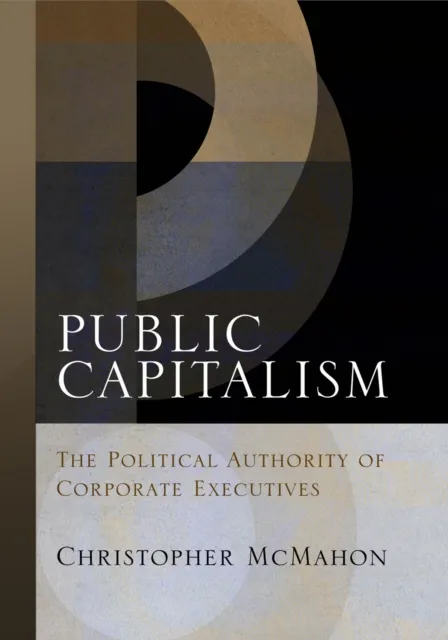
Public Capitalism
The Political Authority of Corporate Executives

In modern capitalist societies
The executives of large, profit-seeking corporations have the power to shape the collective life of the communities, local and global, in which they operate. Corporate executives issue directives to employees, who are normally prepared to comply with them, and impose penalties such as termination on those who fail to comply. The decisions made by corporate executives also affect people outside the corporation: investors, customers, suppliers, the general public. What can justify authority with such a broad reach? Political philosopher Christopher McMahon argues that the social authority of corporate executives is best understood as a form of political authority. Although corporations are privately owned, they must be managed in a way that promotes the public good.
Public Capitalism begins with this claim and explores its implications for issues including corporate property rights, the moral status of corporations, the permissibility of layoffs and plant closings, and the legislative role played by corporate executives. Corporate executives acquire the status of public officials of a certain kind, who can be asked to work toward social goods in addition to prosperity. Public Capitalism sketches a new framework for discussion of the moral and political issues faced by corporate executives.