£199.50
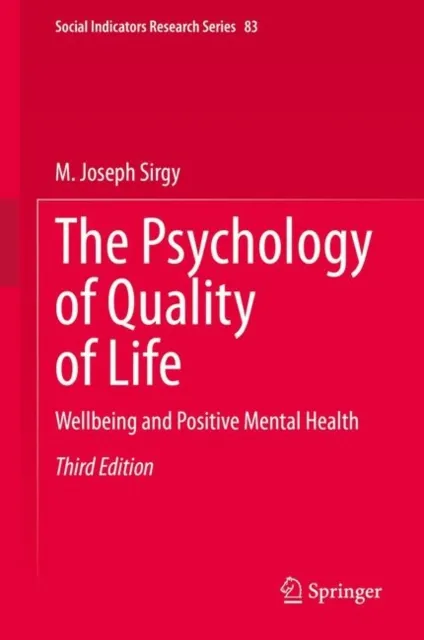
Psychology of Quality of Life
Wellbeing and Positive Mental Health

Book Overview
The third, thoroughly revised and enhanced edition of this bestselling book analyses and discusses the most up-to-date research on the psychology of quality of life. The book is divided into six parts. The introductory part lays the philosophical and academic foundation of much of the research on wellbeing and positive mental health, showing the beneficial effects of happy people at work, health, and to society at large. Part 2 (effects of objective reality) describes how sociocultural factors, income factors, other demographic factors, and biological and health conditions affect wellbeing and positive mental health. Part 3 focuses on subjective reality and discusses how individuals process information from their objective environment, and how they manipulate this information that affects wellbeing and positive mental health. Part 4 focuses on the psychology of quality of life specific to life domains, while Part 5 reviews the research on special populations: children, women, the elderly, but also the disabled, drug addicts, prostitutes, emergency personnel, immigrants, teachers, and caregivers. The final part of the book focuses on theories and models of wellbeing and positive mental health that integrate and unify disparate concepts and programs of research. The book addresses the importance of the psychology of quality of life in the context of public policy and calls for a broadening of the approach in happiness research to incorporate other aspects of quality of life at the group, community, and societal levels. It is of topical interest to academics, students and researchers of quality of life, well-being research, happiness studies, psychotherapy, and social policy.