£47.99
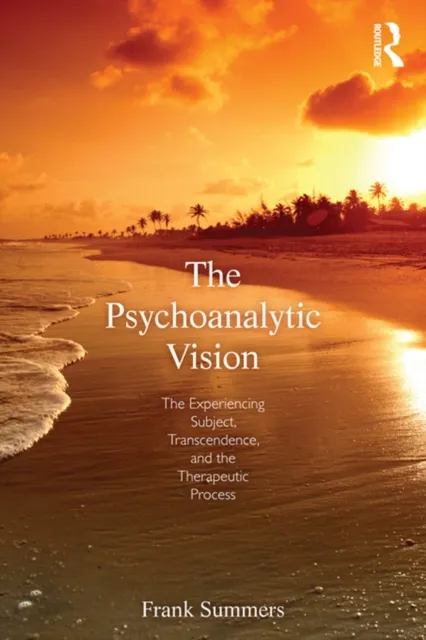
Psychoanalytic Vision
The Experiencing Subject, Transcendence, and the Therapeutic Process

Introduction
Psychoanalytic therapy is distinguished by its immersion in the world of the experiencing subject. In The Psychoanalytic Vision, Frank Summers argues that analytic therapy and its unique epistemology is a worldview that stands in clear opposition to the hegemonic cultural value system of objectification, quantification, and materialism. The Psychoanalytic Vision situates psychoanalysis as a voice of the rebel, affirming the importance of the subjective in contrast to the culture of objectification.
Philosophical Foundations
Founded on phenomenological philosophy from which it derives its unique epistemology and ethical grounding, psychoanalytic therapy as a hermeneutic of the experiential world has no role for reified concepts. Consequently, fundamental analytic concepts such as "the unconscious" and "the intrapsychic," are reconceptualized to eliminate reifying elements.
Theoretical and Clinical Approach
The essence of The Psychoanalytic Vision is the freshness of its theoretical and clinical approach as a hermeneutic of the experiential world. Fundamental clinical phenomena, such as dreams, time, and the experience of the other, are reformulated, and these theoretical shifts are illustrated with a variety of vivid case descriptions.
Cultural Beliefs and Psychopathology
The last part of the book is devoted to the surreptitious role beliefs and values of contemporary culture play in many forms of psychopathology.
Implications for Clinicians and Scholars
For clinicians, The Psychoanalytic Vision offers a fresh clinical theory based on the consistent application of the subjectification of human experience, and for scholars, a worldview that provides the framework for a potentially fruitful cross-fertilization of ideas with cognate disciplines.