£199.99
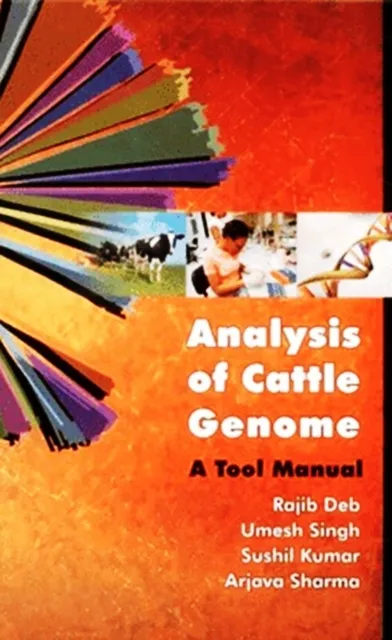
Protocols in Livestock Genome Analysis

Introduction
The book Protocols in Livestock Genome Analysis presents the fundamental principles and detailed protocols of laboratory techniques with an adequate amount of thought been applied towards making it simplistic and effective. The book has been structured into seventeen chapters.
Chapter 1
Gives readers some basic safety and precautions while working in a molecular genetics laboratory that is exposed to hazardous agents.
Chapters 2-4
Explain the most basic and fundamental procedures in molecular genetics laboratory, i.e., isolation of genomic DNA, plasmid DNA, and total RNA, which are prerequisites for researchers conducting downstream genetics research like gene amplification or expression.
Chapter 5
Deals with quantification of DNA and RNA with specific examples.
Chapter 6
Deals with the technique of polymerase chain reaction for amplification of a specific DNA sequence.
Chapter 7
Focuses on various variants of polymerase chain reaction that have been developed over the years for specific applications.
Chapter 8
Discusses reverse transcription polymerase chain reaction, which is an important prerequisite for gene expression studies and genetic characterization.
Chapter 9
Describes agarose gel electrophoresis for the separation of nucleic acids and their analysis.
Chapter 10
Describes single strand conformation polymorphism, a technique capable of identifying most sequence variations in a single strand of DNA.
Chapter 11
Details the restriction digestion of DNA molecules by restriction endonucleases.
Chapter 12
Describes real-time PCR that can detect their accumulation and quantify the number of substrate DNA molecules present in the starting sample.
Chapter 13
Discusses the method of chromatin immunoprecipitation, a very important technique for elucidating the transcriptional regulation of gene expression.
Chapter 14
Deals with detailed analysis of microsatellite repeat sequences along with statistical tools for data analysis.
Chapter 15
Explains the procedures of DNA ligation, competent cells preparation, and transformation involved in cloning of any desired DNA sequence.
Chapter 16
Describes the steps for retrieving QTL & SNP information from online Animal QTL databases.
Chapter 17
Provides a simple understanding of DNA microarrays.
Chapter 18
Details the in situ hybridization method for localization of genetic material.
Chapter 19
Provides the recipe for preparation of buffers and solutions required for conducting various procedures outlined in previous chapters.