£50.99
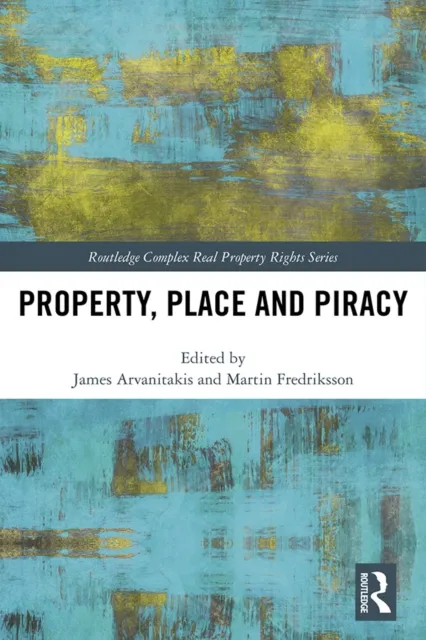
Property, Place and Piracy

Introduction to Piracy and Property
This book takes the concept of piracy as a starting point to discuss the instability of property as a social construction and how this is spatially situated. Piracy is understood as acts and practices that emerge in zones where the construction and definition of property is ambiguous. Media piracy is a frequently used example where file-sharers and copyright holders argue whether culture and information is a common resource to be freely shared or property to be protected. This book highlights that this is not a dilemma unique to immaterial resources: concepts such as property, ownership and the rights of use are just as diffuse when it comes to spatial resources such as land, water, air or urban space.
Analytical Approach and Content
By structuring the book around this heterogeneous understanding of piracy as an analytical perspective, the editors and contributors advance a trans-disciplinary and multi-theoretical approach to place and property. In doing so, the book moves from theoretical discussions on commons and property to empirical cases concerning access to and appropriation of land, natural and cultural resources. The chapters cover areas such as maritime piracy, the philosophical and legal foundations of property rights, mining and land rights, biopiracy and traditional knowledge, indigenous rights, colonization of space, military expansionism and the enclosure of urban space.
Target Audience
This book is essential reading for a variety of disciplines including indigenous studies, cultural studies, geography, political economy, law, environmental studies and all readers concerned with piracy and the ambiguity of property.