£2.99
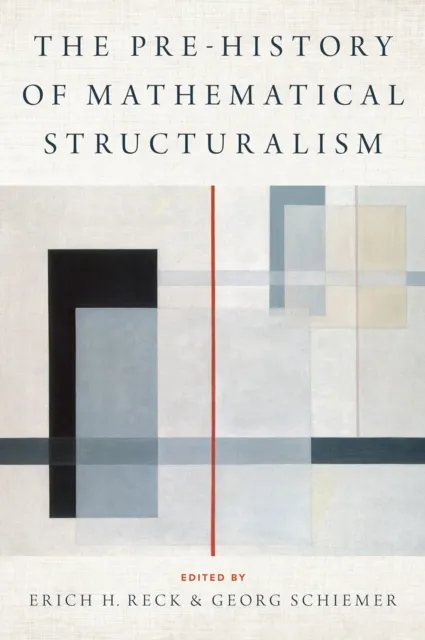
Prehistory of Mathematical Structuralism

This is an open access title available under the terms of a CC BY-NC-ND 4.0 licence. It is free to read at Oxford Scholarship Online and offered as a free PDF download from OUP and selected open access locations.
Recent Developments in Mathematical Structuralism
Debates about mathematical structuralism have picked up steam again within the philosophy of mathematics, probing ontological and epistemological issues in novel ways. These debates build on discussions of structuralism which began in the 1960s in the work of philosophers such as Paul Benacerraf and Hilary Putnam; going further than these previous thinkers, however, these new debates also recognize that the motivation for structuralist views should be tied to methodological developments within mathematics. In fact, practically all relevant ideas and methods have roots in the structuralist transformation that modern mathematics underwent in the 19th and early 20th centuries.
This edited volume of new essays by top scholars in the philosophy of mathematics explores this previously overlooked pre-history of mathematical structuralism. The contributors explore this historical background along two distinct but interconnected dimensions.
Historical and Philosophical Dimensions
First, they reconsider the methodological contributions of major figures in the history of mathematics, such as Dedekind, Hilbert, and Bourbaki, who are responsible for the introduction of new number systems, algebras, and geometries that transformed the landscape of mathematics. Second, they reexamine a range of philosophical reflections by mathematically inclined philosophers, like Russell, Cassirer, and Quine, whose work led to profound conclusions about logical, epistemological, and metaphysical aspects of structuralism.
Significance and Audience
Overall, the essays in this volume show not only that the pre-history of mathematical structuralism is much richer than commonly appreciated, but also that it is crucial to take into account this broader intellectual history for enriching current debates in the philosophy of mathematics. The insights included in this volume will interest scholars and students in the philosophy of mathematics, the philosophy of science, and the history of philosophy.