£64.95
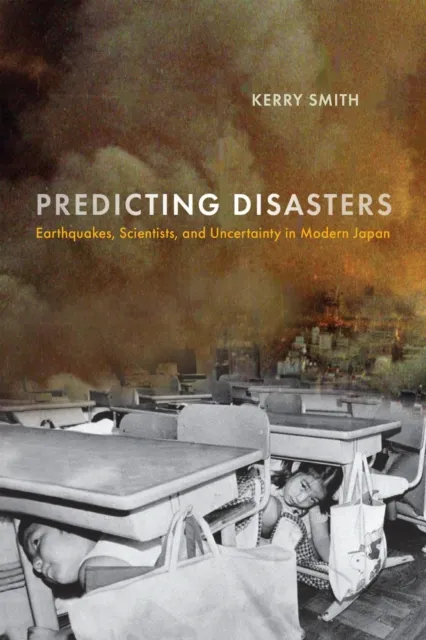
Predicting Disasters
Earthquakes, Scientists, and Uncertainty in Modern Japan

Japan and Earthquake Disasters
Japan is a place where powerful earthquakes have occurred more frequently and have caused more harm in the modern era than they have in all but a handful of other locations on the planet. In the twentieth century alone, earthquake disasters in Japan took almost as many lives as they had in all of the country’s recorded history up to that point. Predicting Disasters is the first English-language book to explore how scientists convinced policy makers and the public in postwar Japan that catastrophic earthquakes were coming, and the first to show why earthquake prediction has played such a central role in Japan’s efforts to prepare for a dangerous future ever since.
Kerry Smith shows how, in the twentieth century, scientists struggled to make large-scale earthquake disasters legible to the public and to policy makers as significant threats to Japan’s future and as phenomena that could be anticipated and prepared for. Smith also explains why understanding those struggles matters. Disasters, Smith contends, belong alongside more familiar topics of analysis in modern Japanese history—such as economic growth and its impacts, political crises and popular protest, and even the legacies of the war—for the work they do in helping us better understand how the past has influenced beliefs about Japan’s possible futures, and how beliefs about the future shape the present.
Predicting Disasters makes relevant elements of Japan’s past more accessible to readers interested in the histories of disaster and scientific communities, as well as to those who want to gain a better understanding of the risk and uncertainty surrounding natural phenomena.