£85.00
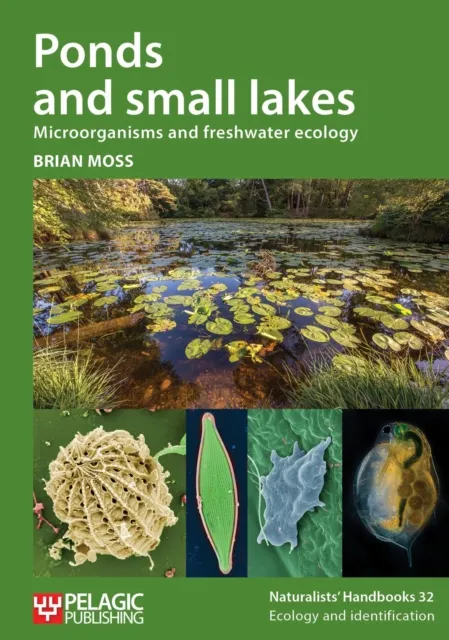
Ponds and small lakes
Microorganisms and freshwater ecology

Introduction to Pond Biodiversity
Ponds and small lakes support an extremely rich biodiversity of fascinating organisms. Many people have tried pond-dipping and encountered a few unfamiliar creatures, such as dragonfly nymphs and caddisfly larvae. However, there is a far richer world of microscopic organisms, such as diatoms, desmids and rotifers, which is revealed in this book. Anyone with access to a microscope can open up this hidden dimension. Identification keys are provided so that readers can identify, explore and study this microscopic world. There are also many suggestions of ways in which readers can then make original contributions to our knowledge and understanding of pond ecology.
The Importance of Ponds
The book not only explores the fascinating world of the creatures within ponds and their interactions, but also explains the many ways in which ponds are important in human affairs. Ponds are being lost around the world, but they are a key part of a system that maintains our climate. In the face of climate change, it has never been more important to understand the ecology of ponds.
Identification Keys Included
Includes keys to: A – Traditional key to kingdoms of organisms; B – Contemporary key to kingdoms of organisms; C – Pragmatic key to groups of microorganisms; D – Algae visible, at least en masse, to the naked eye; E – Periphyton, both attached to surfaces and free living; F - Protozoa; G- Freshwater invertebrates and; H – Common phytoplankton genera in ponds.