£67.99
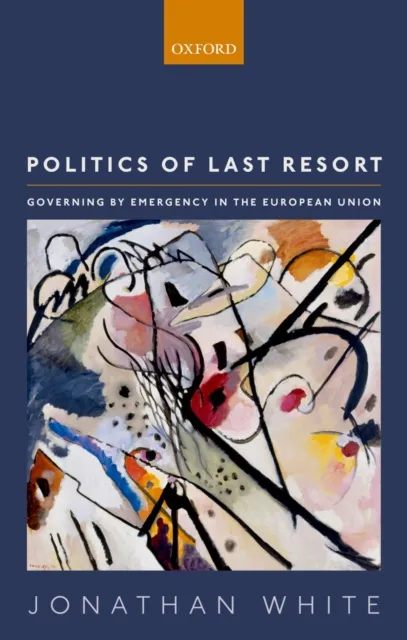
Politics of Last Resort
Governing by Emergency in the European Union

Introduction
Prominent in the EU's recent transformations has been the tendency to advance extraordinary measures in the name of crisis response. From emergency lending to macro-economics, border management to Brexit, policies are pursued unconventionally and as measures of last resort.
Scope of the Book
This book investigates the nature, rise, and implications of this politics of emergency as it appears in the transnational setting. As the author argues, recourse to this method of rule is an expression of the deeper weakness of executive power in today's Europe.
Underlying Dynamics
It is how policy-makers contend with rising socio-economic power and diminishing representative ties, seeking fall-back authority in the management of crises. In the structure of the EU they find incentives and few impediments.
Political Exceptionalism
Whereas political exceptionalism tends to be associated with sovereign power, here it is power's diffusion and functional disaggregation that spurs politics in the emergency mode.
Impacts on Legitimacy and Democracy
The effect of these governing patterns is not just to challenge and reshape ideas of EU legitimacy rooted in constitutionalism and technocracy. The politics of emergency fosters a counter-politics in its mirror image, as populists and others play with themes of necessity and claim the right to disobedience in extremis.
Conclusion
The book examines the prospects for democracy once the politics of emergency takes hold, and what it might mean to put transnational politics on a different footing.