£42.99
Politics of Architectural Pedagogy in Iran
From Pedagogical Revolution to Revolutionary Pedagogy (1960-1990)

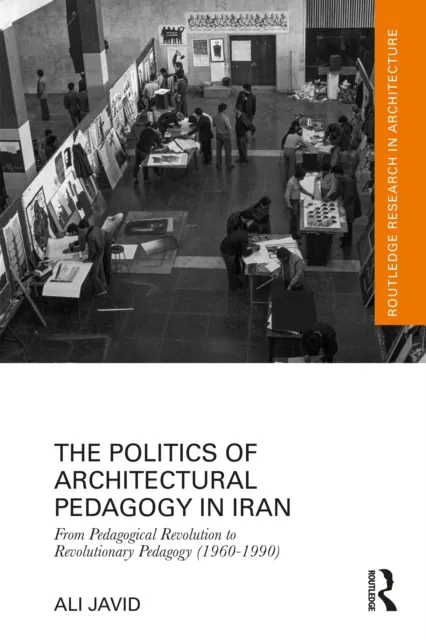
The Politics of Architectural Pedagogy in Iran explores the evolution of architectural pedagogy during two significant socio-political upheavals in Iran: The White Revolution (1963) and the Islamic Revolution (1979). It examines how these transformative periods influenced the field, providing valuable insights into the intersection of architectural education and broader socio-political shifts in Iran.
By examining the critical role of education in achieving geopolitical objectives during the Cold War, this book explores architectural pedagogy as an agent for resistance and revolution. It highlights how architectural pedagogy not only reflects radical ideologies but also actively engages in socio-political transformation. The book uncovers how architectural pedagogy became one of the mechanisms to accomplish revolutionary goals. This is evident in initiatives like the "Pedagogical Revolution" during the White Revolution (1963), aimed at modernizing educational institutions, and the "Revolutionary Pedagogy" during the Islamic Revolution (1979), which sought to serve the masses and the religious revolutionary society. In this way, the book adds a new geopolitical perspective to the contemporary discourse of radical pedagogies.
This book explores the intricate connections between architectural pedagogy and politics through a transdisciplinary approach. It analyzes original multilingual documents, including political agendas, cultural agreements, curricula, teaching methods, student works, exhibitions, and conferences. It will be of interest to architectural historians and architecture students, particularly those interested in Global South development, modernism, architectural pedagogy, international relations, and Middle Eastern studies.