£54.99
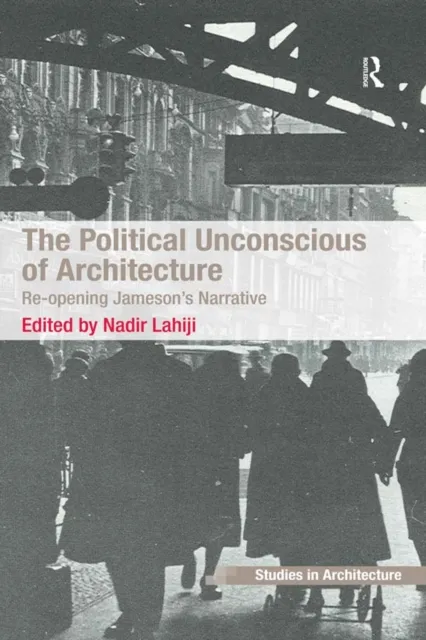
Political Unconscious of Architecture
Re-opening Jameson's Narrative

Introduction
Thirty years have passed since eminent cultural and literary critic Fredric Jameson wrote his classic work, The Political Unconscious: Narrative as a Socially Symbolic Act, in which he insisted that there is nothing that is not social and historical - indeed, that everything is "in the last analysis" political.
Overview of the Book
Bringing together a team of leading scholars including Slavoj Zizek, Joan Ockman, Jane Rendell, and Kojin Karatani, this book critically examines the important contribution made by Jameson to the radical critique of architecture over this period, highlighting its continued importance to contemporary architecture discourse.
Jameson''s notion of the ''political unconscious'' represents one of the most powerful notions in the link between aesthetics and politics in contemporary discourse. Taking this, along with other key concepts from Jameson, as the basis for its chapters, this anthology asks questions such as: Is architecture a place to stage ''class struggle''?, How can architecture act against the conditions that ''affirmatively'' produce it?, What does ''the critical'', and ''the negative'', mean in the discourse of architecture? and, How do we prevent architecture from participating in the reproduction of the cultural logic of late capitalism?
Significance
This book breaks new ground in architectural criticism and offers insights into the interrelationships between politics, culture, space, and architecture and, in doing so, it acts as a counter-balance to the current trend in architectural research where a general aestheticization dominates the discourse.