£39.99
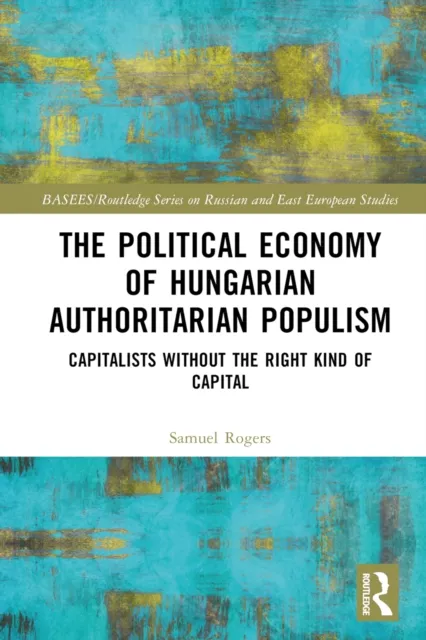
Political Economy of Hungarian Authoritarian Populism
Capitalists without the Right Kind of Capital

Introduction
This book emphasises the importance of state-business relations and external capital for structuring and strengthening authoritarian populism in Hungary. It argues these capitalist relations are crucial to understanding the economic aspects of this ideology, which has developed in the country since 2010.
Scope of the Investigation
The book investigates both ‘internal’ and ‘external’ legs of the Hungarian political economy. First, how a politically loyal national capital owning class has subsumed domestic business. Second, the government’s operationalisation of ‘new’ inward transnational capital inflows – especially from China and Russia – to finance large-scale infrastructure projects, which complement extant investment particularly from Germany.
Implications
Together, these developments have strengthened the hegemonic nature of Hungarian Authoritarian Populism, helping the government to continued electoral success. This model of governance is attractive to similar ideological expressions in the region and beyond who look for an example to emulate.