£56.99
Picturing Punishment
The Spectacle and Material Afterlife of the Criminal Body in the Dutch Republic

Picturing Punishment
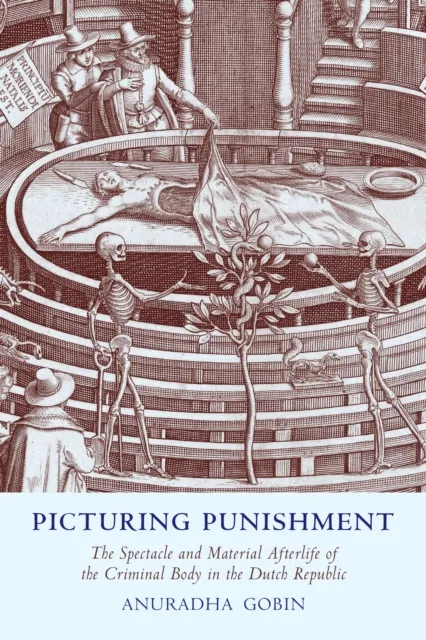
Picturing Punishment examines representations of criminal bodies as they moved in, through, and out of publicly accessible spaces in the city during punishment rituals in the seventeenth-century Dutch Republic. Once put to death, the criminal cadaver did not come to rest. Its movement through public spaces indicated the potent afterlife of the deviant body, especially its ability to transform civic life.
Focusing on material culture associated with key sites of punishment, Anuradha Gobin argues that the circulation of visual media related to criminal punishments was a particularly effective means of generating discourse and formulating public opinion, especially regarding the efficacy of civic authority. Certain types of objects related to criminal punishments served a key role in asserting republican ideals and demonstrating the ability of officials to maintain order and control. Conversely, the circulation of other types of images, such as inexpensive paintings and prints, had the potential to subvert official messages. As Gobin shows, visual culture thus facilitated a space in which potentially dissenting positions could be formulated while also bringing together seemingly disparate groups of people in a quest for new knowledge.
Combining a diverse array of sources including architecture, paintings, prints, anatomical illustrations, and preserved body parts, Picturing Punishment demonstrates how the criminal corpse was reactivated, reanimated, and in many ways reintegrated into society.