£74.50
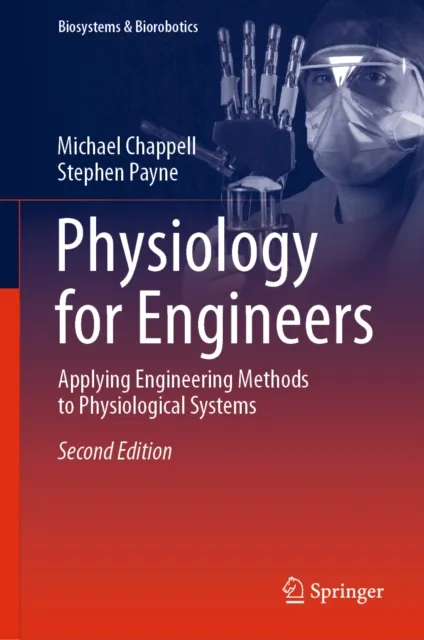
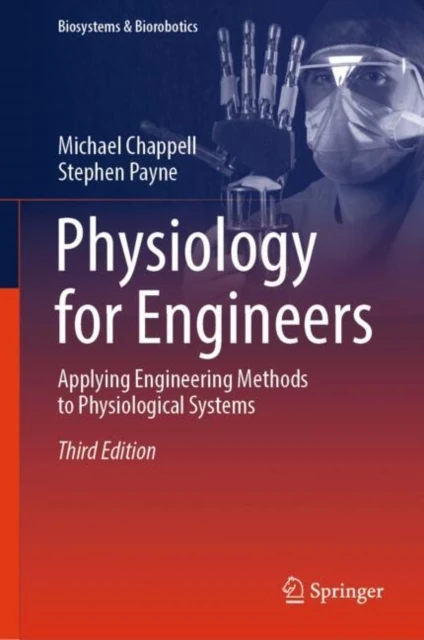
Physiology for Engineers
Applying Engineering Methods to Physiological Systems

Introduction
This book introduces both qualitative and quantitative aspects of human physiology through language and concepts familiar to engineers and other physical scientists. It looks at biological and physiological processes and phenomena, including a selection of mathematical models, showing how physiological problems can be mathematically formulated and studied. It also illustrates how a wide range of engineering and physics topics, including electronics, fluid dynamics, solid mechanics and control theory can be used to describe and understand physiological processes and systems. Throughout the text there are introductions to measuring and quantifying physiological processes using both signal and imaging technologies.
Content Overview
Physiology for Engineers describes the basic structure and models of cellular systems, the structure and function of the cardiovascular system, the electrical and mechanical activity of the heart and provides an overview of the structure and function of the respiratory and nervous systems. It also includes an introduction to the basic concepts and applications of reaction kinetics, compartmental modelling and its application to pharmacokinetics and tracer kinetics.
Target Audience and Updates
The book is of interest to final year biomedical engineering undergraduates and graduate students alike, as well as to practising engineers new to the fields of bioengineering or medical physics. This new edition is fully revised and updated with two completely rewritten chapters on compartmental modelling, demonstrated in application to pharmacokinetics, and multi-scale modelling demonstrated by how to go from “from cells to tissue” in describing physiological systems. The book contains interleaved exercises to make the book even more useful for instructors and students for a one-semester course.