£199.50
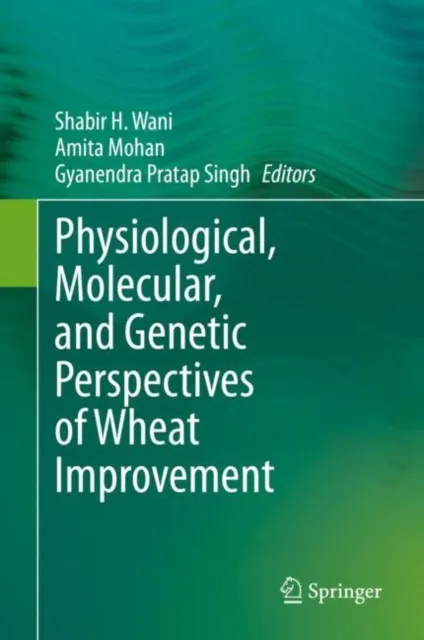
Physiological, Molecular, and Genetic Perspectives of Wheat Improvement

World Population and Agricultural Challenges
World population is growing at an alarming rate and may exceed 9.7 billion by 2050, whereas agricultural productivity has been negatively affected due to yield limiting factors such as biotic and abiotic stresses as a result of global climate change. Wheat is a staple crop for ~20% of the world population and its yield needs be augmented correspondingly in order to satisfy the demands of our increasing world population.
Historical Advances in Wheat Production
“Green revolution”, the introduction of semi-dwarf, high yielding wheat varieties along with improved agronomic management practices, gave rise to a substantial increase in wheat production and self-sufficiency in developing countries that include Mexico, India and other south Asian countries. Since the late 1980’s, however, wheat yield is at a standoff with little fluctuation. The current trend is thus insufficient to meet the demands of an increasing world population.
Future Strategies and Technologies
Therefore, while conventional breeding has had a great impact on wheat yield, with climate change becoming a reality, newer molecular breeding and management tools are needed to meet the goal of improving wheat yield for the future. With the advance in our understanding of the wheat genome and more importantly, the role of environmental interactions on productivity, the idea of genomic selection has been proposed to select for multi-genic quantitative traits early in the breeding cycle. Accordingly, genomic selection may remodel wheat breeding with gains that are predicted to be 3 to 5 times that of crossbreeding.
Phenomics (high-throughput phenotyping) is another fairly recent advancement using contemporary sensors for wheat germplasm screening and as a selection tool. Lastly, CRISPR/Cas9 ribonucleoprotein mediated genome editing technology has been successfully utilized for efficient and specific genome editing of hexaploid bread wheat.
Summary and Outlook
In summary, there have been exciting progresses in the development of non-GM wheat plants resistant to biotic and abiotic stress and/or wheat with improved nutritional quality. We believe it is important to highlight these novel research accomplishments for a broader audience, with the hope that our readers will ultimately adopt these powerful technologies for crop improvement in order to meet the demands of an expanding world population.