£109.50
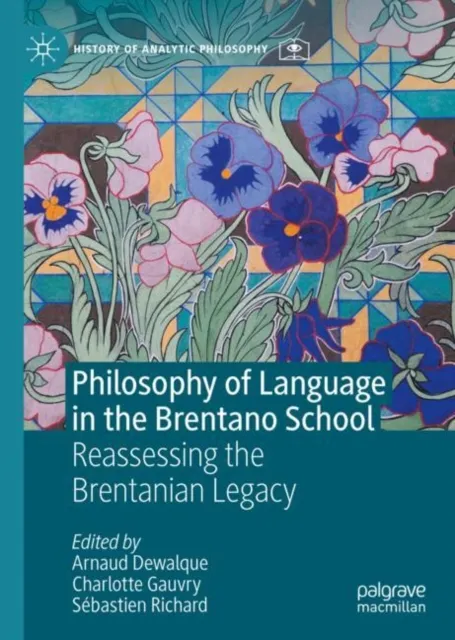
Philosophy of Language in the Brentano School
Reassessing the Brentanian Legacy

Introduction
This collection of fourteen original essays addresses the seminal contribution of Franz Brentano and his heirs, to philosophy of language. Despite the great interest provoked by the Brentanian tradition and its multiple connections with early analytic philosophy, precious little is known about the Brentanian contribution to philosophy of language. The aim of this new collection is to fill this gap by providing the reader with a more thorough understanding of the legacy of Brentano and his school, in their pursuit of a unique research programme according to which the analysis of meaning is inseparable from philosophical inquiries into what goes on in the mind and what there is in the world.
Part One: Brentano’s Thoughts on Meaning and Illusions
In three parts, the volume first reconstructs Brentano’s pathbreaking thoughts on meaning and grammatical illusions, exploring their strong connections with the Austro-German tradition and analytic philosophy.
Part Two: Debates on the Objectivity of Meaning
It then addresses the multifaceted debates on the objectivity of meaning in the Brentano School and its aftermath (Meinong, Husserl, Ingarden, Twardowski and the Lvov-Warsaw School).
Part Three: Brentano’s Wider Legacy
Finally, part three explores Brentano’s wider legacy, namely: Husserl’s theory of modification and typicality, Bühler’s theory of linguistic and non-linguistic expressions, and Wittgenstein’s thoughts on guidance and rule-following.
Conclusion
The result is a unique collection of essays which shows the significance, originality and timely character of the Brentanian philosophy of language.