£49.99
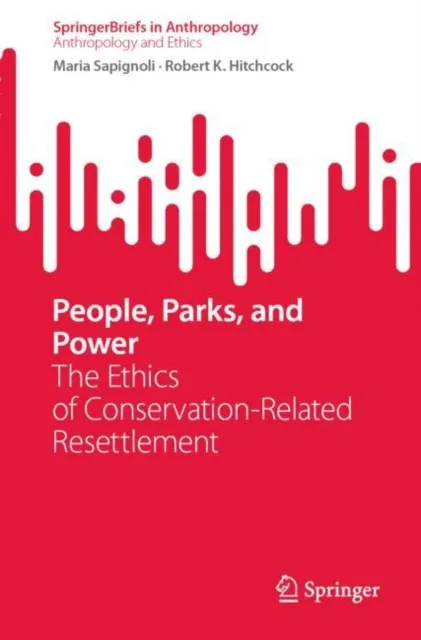
People, Parks, and Power
The Ethics of Conservation-Related Resettlement

Introduction
This book presents a critical review of the ethics of conservation-related resettlement. We examine what has become known as the “parks versus people” debate, also known as the “new conservation debate,” which has pitted indigenous and other local people against nation states and social scientists against ecologists and conservationists for the past several decades. Aiming to promote biodiversity conservation and habitat preservation, some biologists, park planners, and conservation organizations have recommended that indigenous and other people should be removed from protected areas.
Local people, for their part, have argued that residents of the areas that were turned into protected areas, national parks, game reserves and monuments had managed them in productive ways for generations and that they should have the right to remain there and to use natural resources as long as they do so sustainably. This position is often supported by indigenous rights organizations and social scientists, especially anthropologists. There are also some conservation-oriented NGOs that have policies involving a more human rights-oriented approach aimed at poverty alleviation, sustainable development, and social justice.
The book discusses biodiversity conservation, indigenous peoples (those who are ethnic minorities and who are often marginalized politically), and protected areas, those categories of land set aside by nation-states that have various kinds of rules about land use and residence.
Case Studies and Regional Focus
The focus initially is on case studies from protected areas in the United States including Yellowstone National Park, Yosemite National Park, and Glacier National Park and on national monuments and historical parks where resettlement took place. We then consider issues of coercive conservation in southern Africa, including Hwange National Park (Zimbabwe), the Central Kalahari Game Reserve (Botswana), Etosha National Park, and Bwabwata National Park (Namibia), and Kgalagadi Transfrontier Park (South Africa and Botswana). All of these cases involved involuntary resettlement at the hands of the governments.
Social Impacts and Strategies
In the book we consider some of the social impacts of conservation-forced resettlement (CfR), many of which tend to be negative. After that, we assess some of the strategies employed by indigenous peoples in their efforts to recover rights of access to protected areas and the cultural and natural resources that they contain. Examples are drawn from cases in Asia, Africa, and South America. Conclusions are provided regarding the ethics of conservation-related resettlement and some of the best practices that could be followed, particularly with regard to indigenous peoples.