£67.99
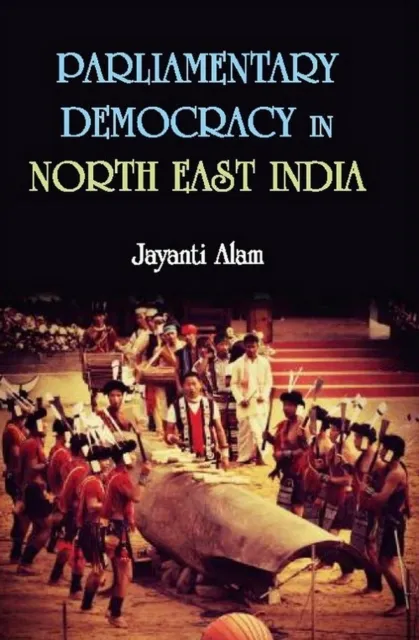
Parliamentary Democracy in North-East India
A Study of Two Communities Each from the States of Assam, Meghalaya and Sikkim

Introduction
As mentioned in the beginning of the "Acknowledgement", I found a general absence of political sense in the tribes of North-east India when I was conducting extensive and intensive field study to understand the socio-cultural characteristics of the Buddhist tribes of Arunachal Pradesh and Sikkim. I had earlier studied a similar aspect amongst the Tibetans in India—both refugees and traditional settlers, who had come as traders many centuries back and become Indian citizens.
Community Consciousness
These tribal communities are vehemently conscious of their language, culture, and way of life, and their "politics" is fighting for those basic rights from both the State governments and the Government of India. We are fully aware of the long-term struggle of the Bodos and the Karbis of Assam. They, unlike the Ahoms or the Bengalis or any other language group of India, are least bothered about problems of India as such, not even if and when Pakistan or China attacks India! They only want their very special identity established.
Focus on Meghalaya and Sikkim
I took up Meghalaya and Sikkim out of the seven sisters of the North-east because their political systems and the awareness amongst the electors and the elected both appeared diametrically opposite! There was no opposition in the Sikkim Assembly (till the recent 2014 election) and no single majority party (again till the recent election) in Meghalaya! The government was of coalition, and the opposition too was of coalition!
Political Dynamics in Sikkim
In Sikkim, the voters appeared so very fully contented with Pawan Chamling as the Chief Minister that they could not think of any other party other than SOF. The deep anti-Congressism (which had sprung up due to Congress Party's role in annexing Sikkim to the Indian Union when the common people were quite contented with the utterly benevolent monarch) had also made the Sikkim Democratic Front utterly popular.
Political Situation in Meghalaya
In Meghalaya, no party or leader appeared to be above board, thus leaving the voters totally confused. So, they mostly voted for the leader they personally liked! There was no political consideration. The vote-seekers too had no specific or attractive agenda that could possibly mobilize the voters successfully. They were unhappy with whichever coalition came to power, without realizing that too many cooks spoil the broth!
Analysis and Reflection
They lacked the political sense to realize that a steady government can possibly indulge in some developmental activity. The parties and the leaders too had no specific manifesto. Thus, parliamentary type of democracy was missing in all the states I studied. It is for my readers to find out where they went wrong and where I went wrong!