£45.99
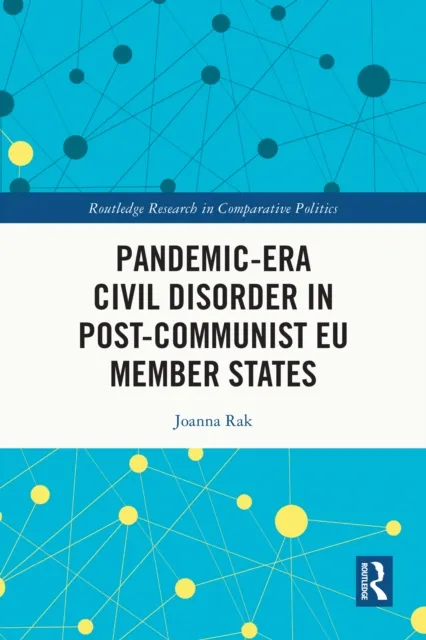
Pandemic-Era Civil Disorder in Post-Communist EU Member States

As public order policing become more prominently widespread so is the need to better explain why some instances of collective action transform into civil disorder. In this book, Joanna Rak advances a middle-range theory to better explain the sources of civil disorder in one of the pandemic-ridden regions of the European Union, the post-communist states.
Supported by systematic empirical evidence of protest policing in 11 countries in the region, Rak delves analytically into conditions of civil disorder in each state to test the hypotheses and offer an explanation. The analysis begins by discussing the demonstration events from the Armed Conflict Location and Event Data Project database. She then identifies conditions of civil disorder development for each demonstration event, including police partisanship, the dimensions of protest policing, and the aggregate model of protest policing. The comparative analysis sheds light on the conditions under which collective action transforms into civil disorder and the outcomes vital for managing the relationship between law enforcement and public gatherings in a way that ensures the safe practice of civil rights.
Pandemic-Era Civil Disorder in Post-Communist EU Member States offers a thought-provoking and nuanced understanding of civil order and democratic struggles in the region and will interest students and researchers of comparative politics, contentious politics, democratic theory, civil society, and post-communism.