£149.50
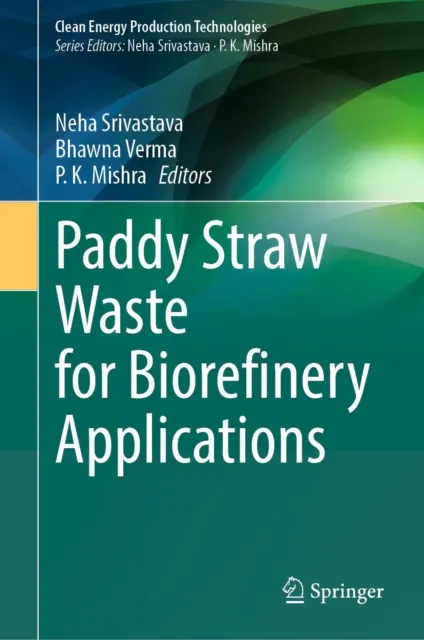
Paddy Straw Waste for Biorefinery Applications

Introduction
This book provides an exclusive and critical in-depth analysis of paddy straw waste valorization at a broad scale for different industrial applications. It explores and discusses the various valorization pathways of paddy straw into valuable products connected to biorefineries'' products and byproducts. The book also examines the scope, potential, and availability of paddy straw in the field of biorefineries.
Industrial Potential of Paddy Straw
Various lignocellulosic biomasses with expanded potential are known for their industrial applications, even at a broad pilot range. Among these biomasses, paddy straw has emerged as the most suitable lignocellulosic waste for various biorefinery applications. Paddy is a crucial and widely consumed crop globally, and it generates the highest annual production of waste compared to other cereal crops. The cellulose content, accounting for approximately 47% of the total cellulosic biomass, offers significant potential for valorization, along with hemicellulose and lignin, which can also be explored and expanded on an industrial scale. However, despite the tremendous scope for valorization, lignocellulosic biomass-based biorefineries face cost-effectiveness challenges that need to be addressed for sustainable and uniform expansion, distribution, and economic scalability in various applications.
Features and Applications
The book''s specific feature lies in its targeted and specific valorization of paddy straw into biofuels and other biorefinery-based products, which hold promising industrial applications and easily scalable approaches for mass production. This book is an essential resource for students, scientists, engineers and practitioners working in the biorefinery industry and academia.