£99.50
Organizational Learning as Relational Governance

Introduction to Organizational Learning
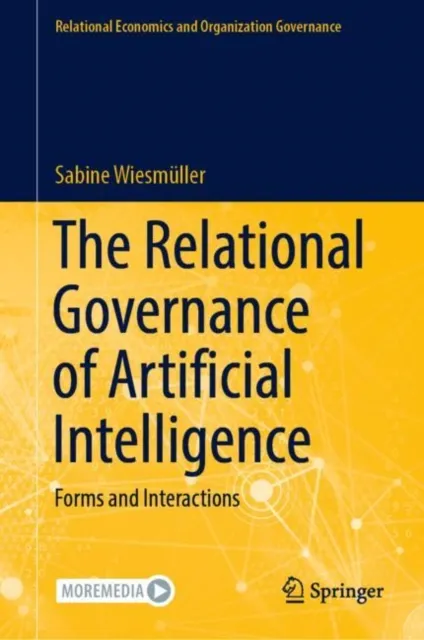
This book critically examines existing organizational learning theories that often center on employees and adopt a neo-classical organizational view. In this book, organizational learning (OL) is conceptualized from a relational governance perspective. Departing from the relational economics approach, it describes organizations as dynamic nexuses of stakeholders'' resources and interests, extending beyond conventional intra-organizational contexts to encompass an open systems view. By viewing organizations as independent entities, distinct from individual stakeholders, the author introduces the concept of transactions as the fundamental unit of analysis in organization theory. Stakeholders contribute diverse rationalities, and OL emerges as the process of relationalizing these rationalities, enabling multi-contextual transactions within organizations.
Epistemological and Ontological Challenges
This book sheds light on epistemological and ontological challenges in OL literature, such as the OL paradox and anthropomorphism. To address these issues, the author advocates a shift from methodological individualism to methodological relationism, wherein OL becomes a micro-meso-relational process involving both stakeholders and the organization as an entity. Combining conceptual insights with empirical evidence from a multinational company''s case study, the book showcases how relational learning can be practically applied in organizations. The findings corroborate the conceptual framework, supporting the notion of organizations as resource-rich nexuses and learning as a comprehensive relational process involving both entities and stakeholders. This book offers an essential contribution to the field. It appeals to scholars and practitioners interested in organizational studies, corporate governance, and relational economics.