£449.99
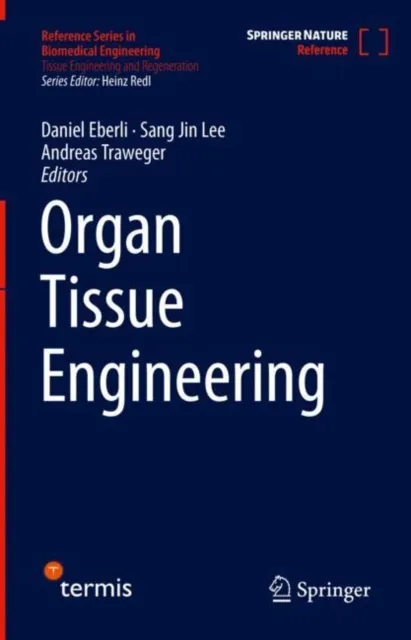
Organ Tissue Engineering

Introduction
The notion of being able to engineer complete organs has inspired an entire generation of researchers. While recent years have brought significant progress in regenerative medicine and tissue engineering, the immense challenges encountered when trying to engineer an entire organ have to be acknowledged. Despite a good understanding of cell phenotypes, cellular niches and cell-to-biomaterial interactions, the formation of tissues composed of multiple cells remains highly challenging. Only a step-by-step approach will allow the future production of a living tissue construct ready for implantation and to augment organ function.
Current Approach and Content
In this book, expert authors present the current state of this approach. It offers a concise overview and serves as a great starting point for anyone interested in the application of tissue engineering or regenerative medicine for organ engineering. Each chapter contains a short overview including physiological and pathological changes as well as the current clinical need. The potential cell sources and suitable biomaterials for each organ type are discussed and possibilities to produce organ-like structures are illustrated. The ultimate goal is for the generated small tissues to unfold their full potential in vivo and to serve as a native tissue equivalent. By integrating and evolving, these implants will form functional tissue in-vivo. This book discusses the desired outcome by focusing on well-defined functional readouts. Each chapter addresses the status of clinical translations and closes with the discussion of current bottlenecks and an outlook for the coming years.
Significance
A successful regenerative medicine approach could solve organ shortage by providing biological substitutes for clinical use - clearly, this merits a collaborative effort.