£9.99
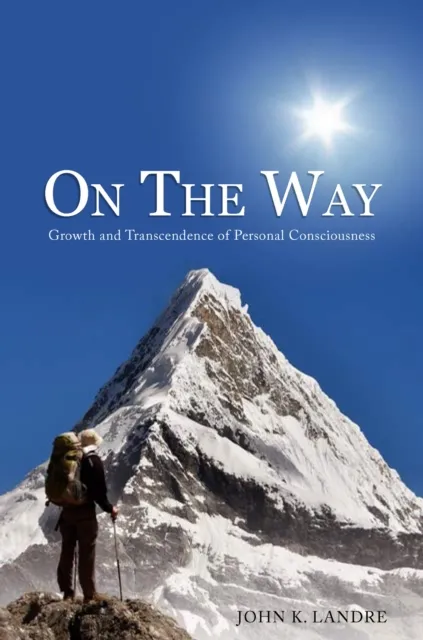
On the Way: Growth and Transcendence of Personal Consciousness

Personal growth
Personal growth is a slow process, so slow that most people are unaware of the fact that, fundamentally, we do change several times during our lives. On the Way is about these personal transformations. It describes how growth of consciousness happens and how we can measure where we are in our individual growth, what comes next for us, and why. It illustrates how, at all levels of development, we can learn to guide our own growth.
The phases of consciousness
Individual consciousness grows through five distinct phases. The first is the consciousness of young children and of primitive adults. Here people trust their instincts more than their feelings or their rational objectivity. In the second phase of consciousness, typical of the teenager, feelings take precedence over instincts and objectivity. This changes in the third phase when instincts and emotions become less than trustworthy, and objectivity and rationality take over as the most reliable sources of awareness. Yet there is a fourth phase of consciousness where even objective, rational thinking no longer appears trustworthy. Then intuition becomes the most reliable form of information. This is the consciousness of the spiritual seeker. To very few a sudden flash of insight happens resulting in a final, fifth phase of consciousness: Enlightenment.
The structure of the book
The book consists of three parts. The first is about how consciousness grows through the first three phases. The second deals with the various paths of spiritual seekers. And the third focuses on which spiritual practice can be expected to be most effective for whom.