£23.99
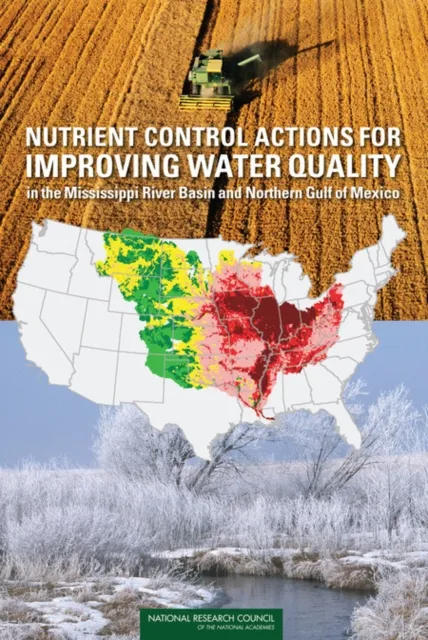
Nutrient Control Actions for Improving Water Quality in the Mississippi River Basin and Northern Gulf of Mexico

Introduction
A large area of coastal waters in the northern Gulf of Mexico experiences seasonal conditions of low levels of dissolved oxygen, a condition known as hypoxia. Excess discharge of nutrients into the Gulf of Mexico from the Mississippi and Atchafalaya rivers causes nutrient overenrichment in the gulf's coastal waters and stimulates the growth of large algae blooms. When these algae die, the process of decomposition depletes dissolved oxygen from the water column and creates hypoxic conditions.
Background and Recommendations
In considering how to implement provisions of the Clean Water Act to strengthen nutrient reduction objectives across the Mississippi River basin, the U.S. Environmental Protection Agency (EPA) requested advice from the National Research Council. This book represents the results of the committee's investigations and deliberations, and recommends that the EPA and U.S. Department of Agriculture should jointly establish a Nutrient Control Implementation Initiative to learn more about the effectiveness of actions meant to improve water quality throughout the Mississippi River basin and into the northern Gulf of Mexico. Other recommendations include how to move forward on the larger process of allocating nutrient loading caps—which entails delegating responsibilities for reducing nutrient pollutants such as nitrogen and phosphorus—across the basin.