£30.59
Nomads and Nation-Building in the Western Sahara
Gender, Politics and the Sahrawi

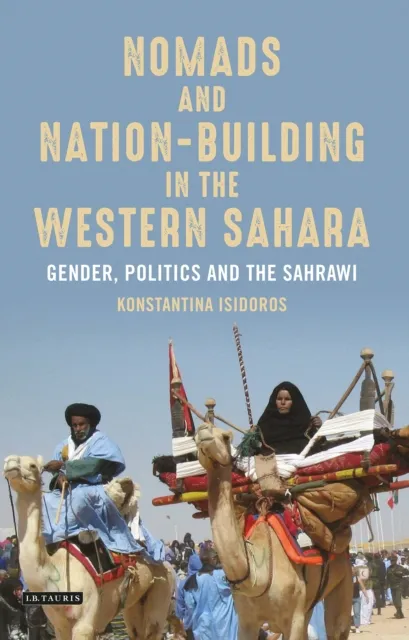
Fabled for more than three thousand years as fierce warrior-nomads and cameleers dominating the western Trans-Saharan caravan trade, today the Sahrawi are admired as soldier-statesmen and refugee-diplomats. This is a proud nomadic people uniquely championing human rights and international law for self-determination of their ancient heartlands: the western Sahara Desert in North Africa. Konstantina Isidoros provides a rich ethnographic portrait of this unique desert society's life in one of Earth's most extreme ecosystems. Her extensive anthropological research, conducted over nine years, illuminates an Arab-Berber Muslim society in which men wear full face veils and are matrifocused toward women, who are the property-holders of tent households forming powerful matrilocal coalitions. Isidoros offers new analytical insights on gender relations, strategic tribe-to-state symbiosis and the tactical formation of "tent-cities".
The book sheds light on the indigenous principles of social organisation - the centrality of women, male veiling and milk-kinship - bringing positive feminist perspectives on how the Sahrawi have innovatively reconfigured their tribal nomadic pastoral society into globalising citizen-nomads constructing their nascent nation-state. This is essential reading for those interested in anthropology, politics, war and nationalism, gender relations, postcolonialism, international development, humanitarian regimes, refugee studies and the experience of nomadic communities.