£109.50
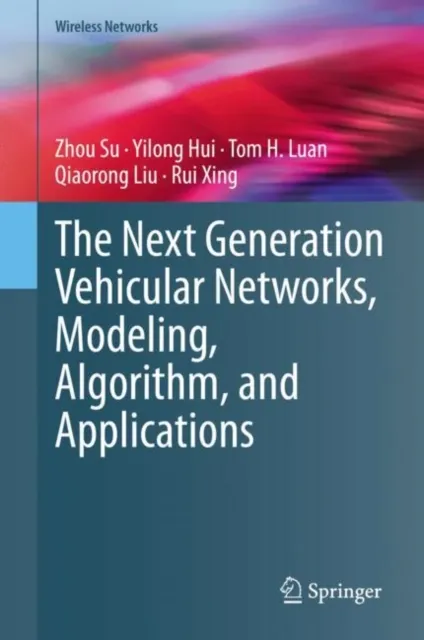
Next Generation Vehicular Networks, Modeling, Algorithm and Applications

Introduction
This book proposes the novel network envisions and framework design principles, in order to systematically expound the next generation vehicular networks, including the modelling, algorithms and practical applications. It focuses on the key enabling technologies to design the next generation vehicular networks with various vehicular services to realize the safe, convenient and comfortable driving. The next generation vehicular networks has emerged to provide services with a high quality of experience (QoE) to vehicles, where both better network maintainability and sustainability can be obtained than before.
Framework and Research Topics
The framework design principles and related network architecture are also covered in this book. Then, the series of research topics are discussed including the reputation based content centric delivery, the contract based mobile edge caching, the Stackelberg game model based computation offloading, the auction game based secure computation offloading, the bargain game based security protection and the deep learning based autonomous driving. Finally, the investigation, development and future works are also introduced for designing the next generation vehicular networks.
Target Audience
The primary audience for this book are researchers, who work in computer science and electronic engineering. Professionals working in the field of mobile networks and communications, as well as engineers and technical staff who work on the development or the standard of computer networks will also find this book useful as a reference.