£45.99
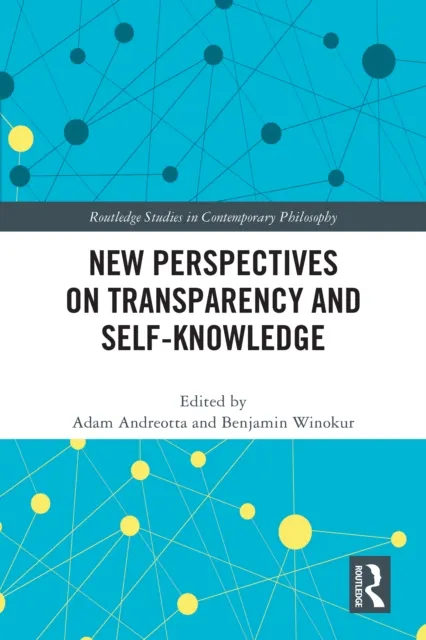
New Perspectives on Transparency and Self-Knowledge

Introduction to Transparency Theories
It is natural to think that self-knowledge is gained through introspection, whereby we somehow peer inward and detect our mental states. However, so-called transparency theories emphasize our capacity to peer outward at the world, hence beyond our minds, in the pursuit of self-knowledge. For all their popularity in recent decades, transparency theories have also met with myriad challenges.
Perspectives and Implications
This volume presents new perspectives on transparency-theoretic approaches to self-knowledge. It addresses many under-explored dimensions of transparency theories and considers their wider implications for epistemology, philosophy of mind, and psychology. Some chapters in this volume aim to deepen our understanding of key themes at the heart of transparency theories, such as the ways in which transparent self-knowledge is properly "first-personal" or "non-alienated". Other chapters offer arguments for extending transparency accounts of self-knowledge to different kinds of mental states and phenomena, such as memory, actions, social groups, and credences. Finally, there are chapters in the volume which discuss interesting relationships between transparency theories, projection, second-order sincerity, and Moore’s Paradox.
Target Audience
This book will appeal to scholars and advanced students working in epistemology, philosophy of mind, and psychology.