£44.99
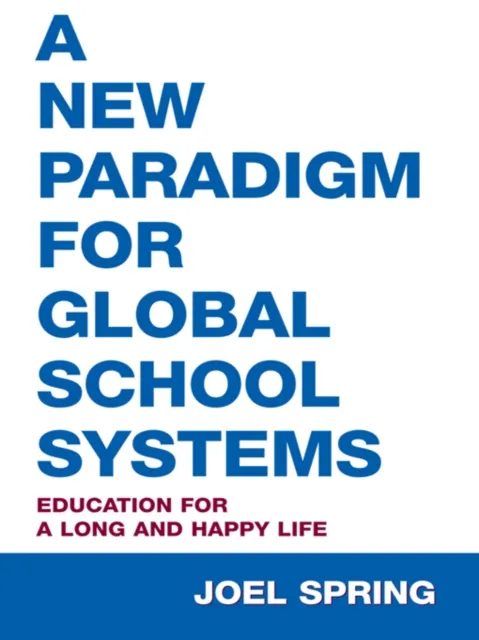
New Paradigm for Global School Systems
Education for a Long and Happy Life

Introduction
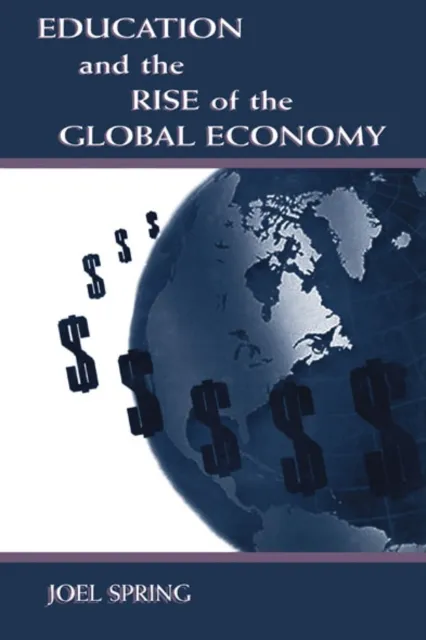
This volume is a major new contribution to Joel Spring reportage and analysis of the intersection of global forces and education—offers a new paradigm for global school systems. Education for global economic competition is the prevailing goal of most national school systems.
Spring argues that recent international studies by economists, social psychologists, and others on the social factors that support subjective well-being and longevity should serve as a call to arms to change education policy; the current industrial-consumer paradigm is not supportive of either happiness or long life.
Spring's Approach
Building his argument through an original documentation, synthesis, and critique of prevailing global economic goals for schools and research on social conditions that support happiness and long life, Spring:
- develops guidelines for a global core curriculum, methods of instruction, and school organizations;
- translates these guidelines into a new paradigm for global school systems based on progressive, human rights, and environmental educational traditions;
- contrasts differing ways of seeing and knowing among indigenous, Western, and Confucian-based societies, concluding that global teaching and learning involve a particular form of holistic knowing and seeing; and
- proposes a prototype for a global school—an eco-school that functions to protect the biosphere and human rights and to support the happiness and well-being of the school staff, students, and immediate community—and for a global core curriculum based on holistic models for lessons and instruction.
Conclusion
The book concludes with Spring’s retelling of Plato’s parable of the cave—in which educators break the chains that bind them to the industrial-consumer paradigm and rethink their commitment to humanity’s welfare.