£72.99
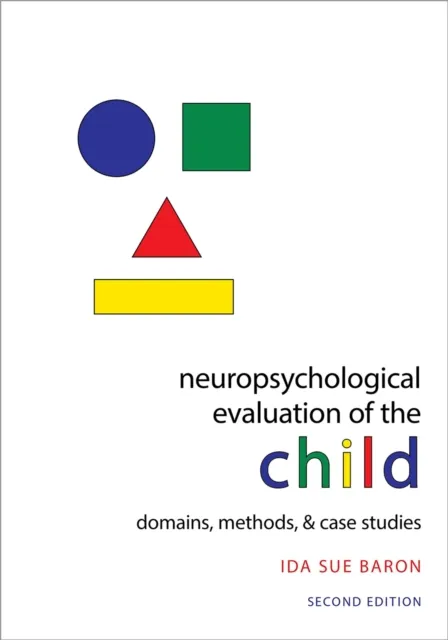
Neuropsychological Evaluation of the Child
Domains, Methods, & Case Studies

Neuropsychological Evaluation of the Child: Domains, Methods, and Case Studies, Second Edition
is an updated and expanded desk reference that retains the first edition's organizational structure, strong practical focus, and lifespan developmental perspective. It is a unique compilation of published and unpublished pediatric neuropsychological test normative data that contains extensive discussion of assessment methods and case formulation. Added for the first time are instructive clinical case vignettes that explicate brain-behavior relationships in youth, from preschool-age through adolescence. These cases illustrate immediate and late effects that result from common and rare medical diseases and psychological disorders, and highlight key issues that arise when examining a child's maturational trajectory and brain-behavioral relationships using convergence profile analysis.
Part I, Child Neuropsychology: Current Status, contains four introductory chapters regarding definitions, education and training, and professional roles; reasons for referral; typical and atypical brain development; and clinical practice considerations.
In Part II, Clinical Issues, discussion covers the procedural steps of neuropsychological assessment, behavioral assessment techniques, observational data, and oral and written communication of results. These chapters are followed in Part III, Domains and Tests, by extended coverage of topics and tests related to the major neuropsychological domains: intelligence, executive function, attention and processing speed, language, motor and sensory-perceptual function, visuoperceptual, visuospatial and visuoconstructional function, and learning and memory.
A final chapter addresses deception in childhood, reasons why a child might reduce effort and invalidate assessment, and the use of performance validity tests, symptom validity tests, and embedded validity indicators to assess noncredible effort. Each of the 16 chapters includes definitions, theoretical concepts, models, and assessment techniques that are essential knowledge for clinical and research pediatric neuropsychologists.