£249.50
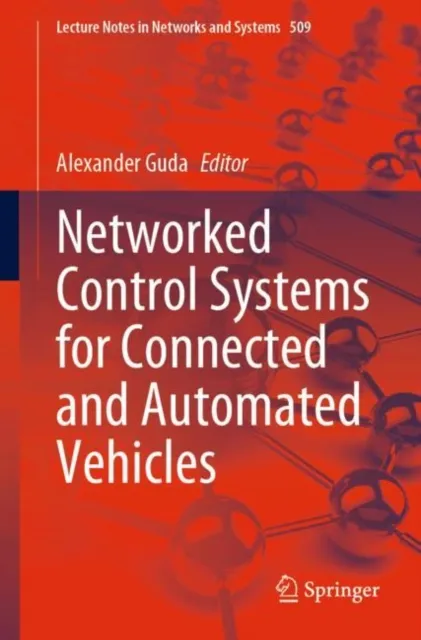
Networked Control Systems for Connected and Automated Vehicles
Volume 2

Control of large-scale distributed energy systems over communication networks
is an important topic with many application domains. The book presents novel concepts of distributed control for networked and cyber-physical systems (CPS), such as smart industrial production lines, smart energy grids, and autonomous vehicular systems. It focuses on new solutions in managing data and connectivity to support connected and automated vehicles (CAV).
Conference and Research
The book compiles original research papers presented at the conference “Networked Control Systems for Connected and Automated Vehicles” (Russia). The latest connected and automated vehicle technologies for next generation autonomous vehicles are presented.
Goals and Advances
The book sets new goals for the standardization of the scientific results obtained and the advancement to the level of full autonomy and full self-driving (FSD). The book presents the latest research in artificial intelligence, assessing virtual environments, deep learning systems, and sensor fusion for automated vehicles. Particular attention is paid to new safety standards, safety and security systems, and control of epidemic spreading over networks.
Transport Infrastructure
The issues of building modern transport infrastructure facilities are also discussed in the articles presented in this book.
Intended Audience
The book is of considerable interest to scientists, researchers, and graduate students in the field of transport systems, as well as for managers and employees of companies using or producing equipment for these systems.