£44.99
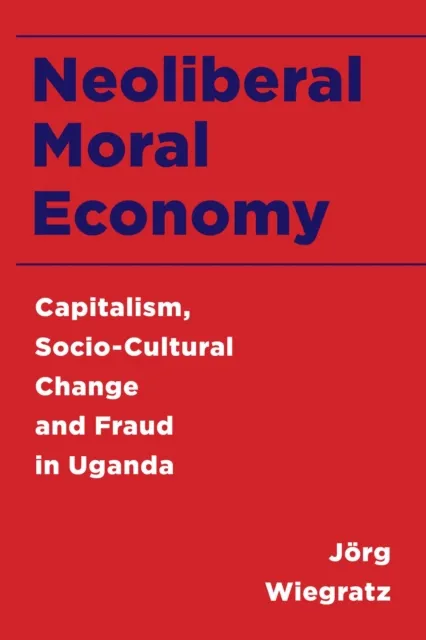
Neoliberal Moral Economy
Capitalism, Socio-Cultural Change and Fraud in Uganda

Introduction
This book offers a fresh take on a major question of global debate: what explains the rise in economic fraud in so many societies around the world? The author argues that the current age of fraud is an outcome of not only political-economic but also moral transformations that have taken place in societies reshaped by neoliberalism.
Case of Uganda
Using the case of Uganda, the book traces these socio-cultural and especially moral repercussions of embedding neoliberalism. Uganda offers an important case of investigation for three reasons: the high level of foreign intervention by donors, aid agencies, international organisations, NGOs and corporations that have tried to produce the first fully-fledged market society in Africa there; the country’s reputation as having adopted neoliberal reforms most extensively, and the intensification of fraud in many sectors of the economy since the early 2000s.
Analysis and Findings
The book explores the rise and operation of the neoliberal moral economy and its world of hard and fraudulent practices. It analyses especially the moral-economic character of agricultural produce markets in eastern Uganda. It shows that neoliberal moral restructuring is a highly political, contested and conflict-ridden process, predominantly works via recalibrating the political-economic structure of a country, and deeply affects how people think and go about earning a living and treat others with whom they do business. The book offers an in-depth, data-based analysis of the moral climate of a market society in motion and in so doing offers insights and lessons for elsewhere in the Global South and North.