£36.00
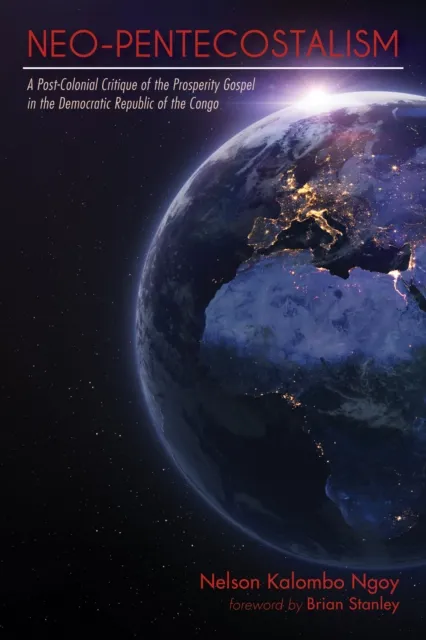
Neo-Pentecostalism
A Post-Colonial Critique of the Prosperity Gospel in the Democratic Republic of the Congo

Historical Context of Pentecostalism in Africa
For centuries, Pentecostalism has played a significant role in oppressively shaping the life of formerly colonized people of Africa. Moreover, its theologies have perpetuated neocolonial policies developed through the lens of colonial legacies rooted in la mission civilisatrice (mission to civilize).
Reshaping Congolese Christendom
However, since the 1980s, Neo-Pentecostalism is increasingly reshaping the Congolese Christendom. It sanctions the theologies of a prosperity gospel rooted in an uncritical reading of the Bible and self-theologizing informed by a lack of literal, contextual translation effects.
Arguments and Focus of the Book
This book argues that the prosperity gospel bankrupts its adherents—in this case, the vulnerable, impoverished sections of Sub-Saharan Africa, and particularly the Postcolonial Congo—and instead offers a balanced theological reflection that broadens Neo-Pentecostal studies with an African voice encouraging the rewriting and rereading of the story of redemptive mission.
The research engages a paradigm shift within global missions and world Christianity, or the history of missions as the platform to negotiate literal, prophetic, and contextual translation and retransmission of the biblical gospel.
Reclaiming a Hermeneutic
It is critical to reclaim and reestablish a hermeneutic of mixed methodologies and construct a contextual and critical interpretation of the Bible in the Congo. To avoid the African assumption of cultural baggage, which affects how the Congolese interpret the Bible, the interpreter has to be neutral and experience the voice of Christ in the text instead of the voice of Congolese culture; they must be a prophetic voice to reconstruct the authentic meaning of the salvific story.