£35.00
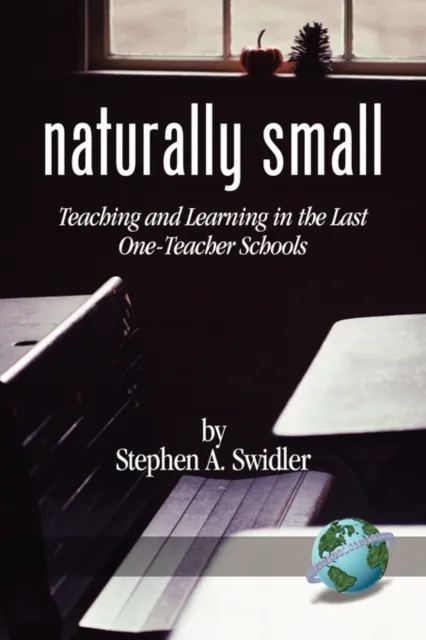
Naturally Small
Teaching and Learning in the Last One-Room Schools

Introduction
This book documents and compares the social organization and academic arrangement of instruction in two remaining modern, public one-teacher schools in rural Nebraska. Neither school is an educational intervention and both stand far removed from reform consciousness, in both the minds of reformers and in those of the people who inhabit them.
Teacher Practices
Each school's teacher does what comes naturally to her or him and the two teachers engage in remarkably distinct practices. One creates an especially efficient form of traditional, conservative teaching that echoes strongly the old country school recitation. The other sees his work as encouraging his students "to think" and has created a conversation-based pedagogy to achieve this.
Influences on Teaching
For both teachers, the school size and rural circumstance play into what they believe they can and cannot do and profoundly shape their teaching practices.
Research Focus
This book asks simply: How do the teachers in these small schools manage to teach? The research reported here is concerned with how teachers and students organize themselves and ""do school"" that is small in scale. If school size is emerging as some important variable in student achievement and school improvement, and smallness is some key to that variable, then it stands to reason that one-teacher schools still have something to tell us.
Audience and Purpose
While the primary audience for this book is teachers, teacher educators, and education policymakers, others, such as parents, might pick up this book and see some images of schooling that are both familiar and strange to them. The book offers portraits of instruction that can offer readers something to think with as we consider what it takes to improve school life for our own and other people's children.