£11.87
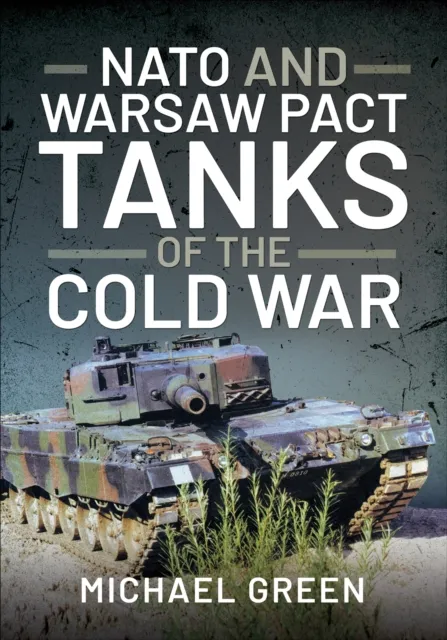
NATO and Warsaw Pact Tanks of the Cold War

Introduction
Led by the USA with Western European partners, the North Atlantic Treaty Organization (NATO) was formed in 1949 to counter the Soviet threat. In response, the Soviet Union assembled and dominated the Warsaw Pact in 1954. The mainstay of both alliances’ groundforces were their main battle tanks (MBTs).
Early Cold War MBTs
Initially, both sides relied on Second World War MBTs; in NATO’s case, the Sherman medium tank and its successor the M26 Pershing, together with the British Centurion and the heavy Conqueror. The Soviets originally fielded the T-34-85 medium tank, and the IS-2 and IS-3 heavy tanks, which were replaced by the T-10.
Development of Soviet MBTs
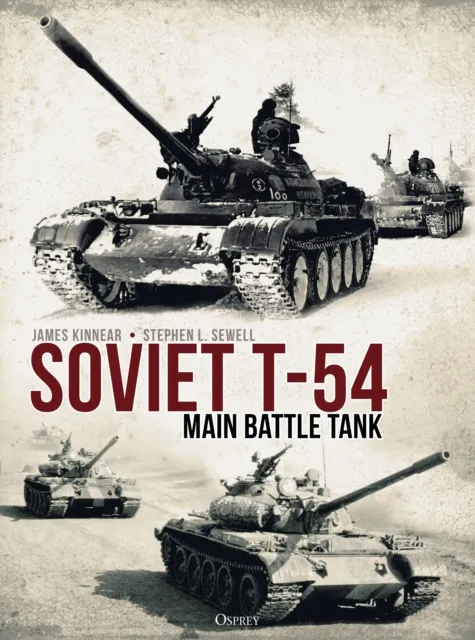
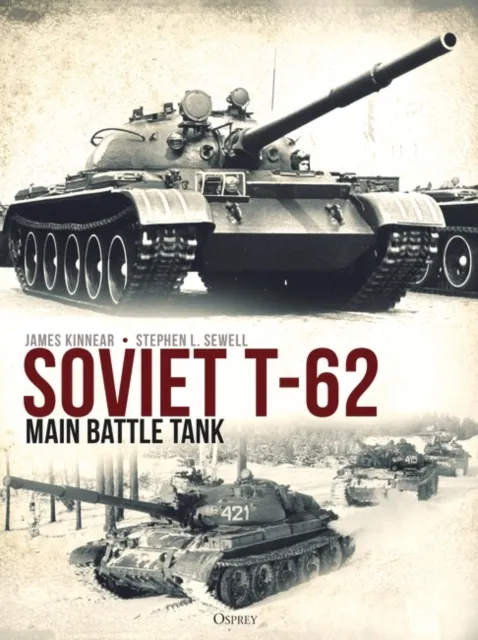
Next came the T-54, followed by the T-55 and the 155mm armed T-63 (1965). The final WP Cold War MBTs were the T-64, T-72, and T-80, all with 122mm main armament.
NATO MBTs
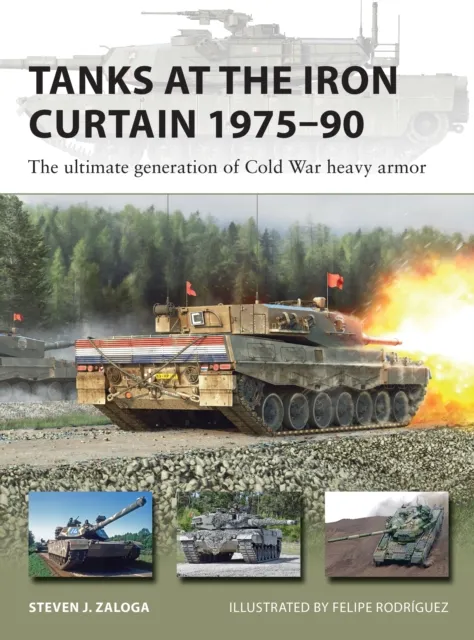
By contrast, NATO nations increasingly deployed a range of MBTs; the widely used American Patton series (M46 through M48), British Chieftain (1963) and Challenger (1982), French AMX-13 (1950) and AMX-30. From 1963, the Bundeswehr was equipped with the homegrown Leopard 1 and 2. The US M60 series and M1 Abrams came into service from 1980.
Conclusion
These and more MBTs and variants are covered in expert detail in this superbly illustrated book.