£35.00
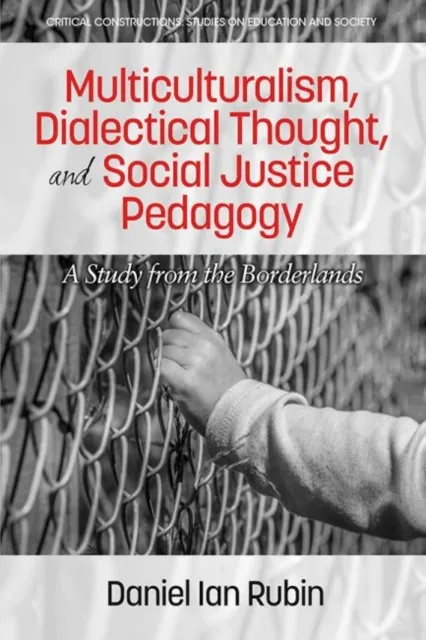
Multiculturalism, Dialectical Thought, and Social Justice Pedagogy
A Study from the Borderlands

Overview of the Study
This monograph lays out a qualitative, collective case study designed to assess how students in a secondary Latina/Latino Literature class began to think dialectically about issues of social justice. By using various methods of data collection, I ascertained how the students' thoughts and perceptions of Latinas/Latinos in this country changed over the course of the study.
Texts and Methodology
I introduced the students to both print and nonprint texts (e.g., news articles, documentary films) which, when presented through Karl Marx's dialectical method, helped them see social justice issues, such as racism, poverty, and subjugation, more clearly and critically.
Emerging Themes
After analysis, several important themes emerged from the data: stereotyping and invisibility in the media, immigration, the notion of power, racism and discrimination, education, anger and frustration, and questioning.
Outcomes and Student Development
By the end of the Latina/Latino Literature class, all of the students in the study were able to identify particular social justice issues, explain the historical context which framed the current debates (e.g., immigration reform), and articulate their opinions of the issues. Each student participant started to use social justice terminology, which I introduced and used frequently in class (e.g., equity), and these words became a part of the students' everyday vocabularies.
Furthermore, by the completion of the class, the student participants began to realize that they had their own individual voices and could help transform societal issues in order to make the United States more equitable for all.